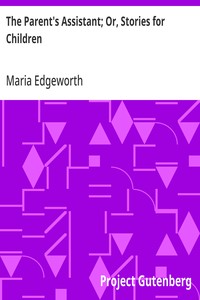
The Parent's Assistant; Or, Stories for Children by Maria Edgeworth
The Story
The book is actually a bunch of smaller stories, all aimed at helping kids figure out right from wrong. You'll meet Rosamund, a little girl who wants a fancy purple jar more than she wants something she needs. You'll see a boy named Lazy Lawrence who just can’t quit napping, and it gets him into trouble. Edgeworth uses daily life like chores, shopping, school, and play as stages for lessons. The biggest struggle is always inside a character's head: Should I cheat and get what I want quickly? Or be patient and work hard for the real reward? And usually, work—and honesty—wins out. But she isn't bossy about it; it always feels like your own discovery.
Why You Should Read It
These stories matter because they're utterly real, even in this age of screens. Kids today still face peer pressure, getting bored, or handling jealousy. Edgeworth was writing in the 1700s-1800s, a forward‑thinker fascinated by education (she even worked with her dad, a famous inventor-slash-teacher). She believed stories could shape us without yawns. So these are psychology masks as fiction: a kind encouragement to be just and kind. Reading them now is time-travel too—you get the slang (“madam,” “pin money”), the early upbringings of British country folk, yet every lesson whispers across centuries. You link mentally with your own impulsive childhood. For parents? That’s you: this book becomes a non-wacky bonding language around bedtime talking about choice.
Final Verdict
Did I enjoy? Yes, sometimes a tonic from coffee-crushing genres. It’s marvelously un‑fancy. Edgeworth trusted her readers will like a rational happy ending; and unshakeable sturdy education over force. Who else? ✓ Parents who dread cynical kids’ media. ✓ Homeschool setup crowd. ✓ MG tug reading types craving wholesome clay. Readers concerned by narratives develop inner compass plus showing neighborly tolerance today—give this delightful teaching retro piece a starting loud pop.
This work has been identified as being free of known copyright restrictions. Access is open to everyone around the world.
John Gonzalez
11 months agoThis work demonstrates a clear mastery of contemporary theories.