
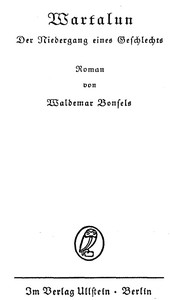
Wartalun: Der Niedergang eines Geschlechts by Waldemar Bonsels
Waldemar Bonsels, best known for his children's classic 'The Adventures of Maya the Bee,' takes a sharp turn into darker territory with 'Wartalun.' Published in the early 20th century, this novel steps away from whimsy to tell a solemn story about endings.
The Story
The book follows the Wartaluns, a noble family whose time has passed. Their wealth is gone, their influence has faded, and their grand estate is more of a burden than a home. The story centers on the last members of the line as they navigate a world that no longer has a place for them. We see their struggles to maintain appearances, their clashes over how to face their new reality, and the quiet despair that comes with knowing you are the end of something. There's no single villain or dramatic event that destroys them; their downfall is a slow, creeping process shaped by changing times and their own inability to adapt.
Why You Should Read It
This book grabbed me because of its mood. Bonsels creates an atmosphere of melancholy that is almost tangible. You can feel the dust settling in the halls of the Wartalun home. The characters aren't always likable—they can be proud and stubborn—but their grief for a vanishing way of life feels deeply human. It's a powerful study of how people cope when their entire identity is tied to something that's disappearing. Reading it feels like watching a beautiful, old photograph slowly fade. It’s less about plot twists and more about capturing a specific, poignant feeling of loss that resonates even today.
Final Verdict
This is a book for a specific mood. It's perfect for readers who enjoy character-driven, atmospheric novels like those by Thomas Mann or Theodor Fontane. If you're looking for a fast-paced plot or a happy ending, look elsewhere. But if you want a thoughtful, beautifully sad exploration of family, legacy, and the passage of time, 'Wartalun' is a hidden gem. It's a quiet, literary novel that offers a moving look at the personal cost of social change.
This book is widely considered to be in the public domain. Thank you for supporting open literature.
Sarah White
5 months agoThe clarity of the introduction set high expectations, and it addresses the common misconceptions in a very professional manner. A perfect balance of theory and practical advice.
Richard Taylor
1 year agoFrom a researcher's perspective, the structural organization allows for quick referencing of key points. I'm glad I chose this over the other alternatives.
Linda Lopez
3 months agoI've gone through the entire material twice now, and the attention to detail regarding the core terminology is flawless. A refreshing and intellectually stimulating read.
Susan Scott
2 years agoTo be perfectly clear, the arguments are well-supported by credible references. Truly inspiring.






Emily Martin
6 months agoThe research depth is palpable from the very first chapter.