
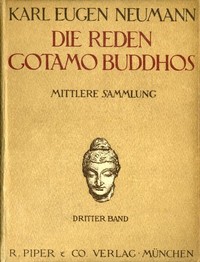
Die Reden Gotamo Buddhos. Mittlere Sammlung, dritter Band by Karl Eugen Neumann
Let's be clear from the start: this is not a novel. There's no protagonist's journey in the traditional sense. Die Reden Gotamo Buddhos (The Discourses of Gautama Buddha) is the third volume of the 'Middle Length Collection,' one of the oldest and most important records of the Buddha's teachings. Translated by Karl Eugen Neumann in the early 20th century, it presents a series of suttas (discourses) given by the Buddha to everyone from kings and wealthy merchants to humble monks and skeptical outsiders.
The Story
There isn't a single plot. Instead, imagine a series of vivid scenes. A young man obsessed with his own beauty comes to the Buddha, who helps him see the impermanent nature of the body. A group of monks is arguing, and the Buddha steps in not to take sides, but to show them how their attachment to views is the real problem. He explains the nature of the mind, the chain of cause and effect that leads to suffering, and a practical path of ethical living, meditation, and wisdom meant to unravel that chain. The 'story' is the unfolding of these ideas through dialogue, parable, and direct instruction. It’s the record of a man offering a radical diagnosis for the human condition and a detailed prescription for its cure.
Why You Should Read It
I picked this up out of historical curiosity, but I was stunned by how immediate it felt. Neumann's German translation (even for a non-native reader like me, with some effort) has a grave, powerful rhythm. The Buddha here isn't a mystical god-figure; he's frighteningly logical, compassionate but unsentimental. He doesn't promise heaven. He promises the end of suffering through your own understanding. Reading it is like mental calisthenics. It challenges your most basic assumptions about what you want, who you are, and what brings happiness. Some passages are incredibly dense, but then you'll hit a simple analogy about a raft (use the teachings to cross the river, then don't carry the raft on your head!) that stops you in your tracks. It’s a book to read slowly, a few pages at a time, and just sit with.
Final Verdict
This is a niche book, but a profound one. It's perfect for the intellectually curious reader who is tired of self-help platitudes and wants to engage with one of humanity's most rigorous and influential systems of thought at the source. It's for the person interested in philosophy, psychology, or ancient history, who doesn't mind working a bit for their insights. It is not a light read or an easy introduction to Buddhism—it's the deep end. But if you're willing to wade in, the water is astonishingly clear. Approach it not as a sacred text to be believed, but as a challenging, millennia-old conversation about life that you're invited to join.
This book is widely considered to be in the public domain. It is now common property for all to enjoy.




John Johnson
9 months agoI wanted to compare this perspective with traditional views, the narrative arc keeps the reader engaged while delivering factual content. An excellent example of how quality digital books should be formatted.