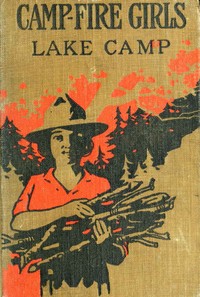
Campfire Girls' Lake Camp; or, Searching for New Adventures — Edition Insights

(2 User reviews)   557
Benson, Irene Elliott, Francis, Stella M., Baden, Frances Henshaw, 1835-1911 [Contributor] Project Gutenberg 2019
Children's stories, American; Camp Fire Girls -- Juvenile fiction; Camping -- Juvenile fiction; Virginia -- History -- Colonial period, ca. 1600-1775 -- Juvenile fiction; Pocahontas, -1617 -- Juvenile fiction Readers of public-domain and historical texts
Project Gutenberg digital edition en

Edition facts

Words: 70,266
Reading time: 306 min
Text sections: 46
This editorial note examines the structural tension between the Camp Fire Girls' modern camping adventures and a lengthy historical fiction about Pocahontas, noting shifts in voice, pacing, and descriptive detail across the two embedded narratives.
Share
Editorial Edition Score 4.8/5

Calculated from edition completeness, EPUB availability, text structure and catalogue metadata. Not a user rating.

Edition quality

Read the Text

ABOUT TEETH AND TEDDY BEARS.

“Girls, I have some great news for you. I’m sure you’ll be interested, and I hope you’ll be as delighted as I am. Come on, all of you. Gather around in a circle just as if we were going to have a Council Fire and I’ll tell you something that will—that will—Teddy Bear your teeth.”

A chorus of laughter, just a little derisive, greeted Katherine Crane’s enigmatical figure of speech. The merriment came from eleven members of Flamingo Camp Fire, who proceeded to form an arc of a circle in front of the speaker on the hillside grass plot near the white canvas tents of the girls’ camp.

“What does it mean to Teddy Bear your teeth?” inquired Julietta Hyde with mock impatience. “Come, Katherine, you are as much of a problem with your ideas as Harriet Newcomb is with her big words. Do you know the nicknames some of us are thinking of giving to her?”

“No, what is it?” Katherine asked.

“Polly? Why Polly?” was the next question of the user of obscure figures of speech, who seemed by this time to have forgotten the subject that she started to introduce when she opened the conversation.

“Polly Syllable, of course,” Julietta answered, and the burst of laughter that followed would have been enough to silence the most ambitious joker, but this girl fun-maker was not in the least ambitious, so she laughed appreciatively with the others.

“Well, anyway,” she declared after the merriment had subsided; “Harriet always uses her polysyllables correctly, so I am not in the least offended at your comparison of my obscurities with her profundities. There, how’s that? Don’t you think you’d better call me Polly, too?”

“Not till you explain to us what it means to Teddy Bear one’s teeth,” Azalia Atwood stipulated sternly. “What I’m afraid of is that you’re trying to introduce politics into this club, and we won’t stand for that a minute.”

“Oh, yes, Julietta, you may have your wish, if what Azalia says is true,” Marie Crismore announced so eagerly that everybody present knew that she had an idea and waited expectantly for it to come out. “We’ll call you Polly—Polly Tix.”

Of course everybody laughed at this, and then Harriet Newcomb demanded, that her rival for enigmatical honors make good.

“What does it mean to Teddy Bear one’s teeth?” she demanded.

“Oh, you girls are making too much of that remark,” Katherine protested modestly. “I really am astonished at every one of you, ashamed of you, in fact, for failing to get me. I meant that you would be delighted—dee-light-ed—get me?—dee-light-ed.”

“Oh, I get you,” Helen Nash announced, lifting her hand over her head with an “I know, teacher,” attitude.

“Well, Helen, get up and speak your piece,” Katherine directed.

“You referred to the way Theodore Roosevelt shows his teeth when he says he’s “dee-light-ed”; but we got you wrong. When you said you would tell us something that would ‘Teddy Bear’ our teeth, you meant b-a-r-e, not b-e-a-r. When Teddy laughs, he bares his teeth. Isn’t that it?”

“This isn’t the first time that Helen Nash has proved herself a regular Sherlock Holmes,” Marion Stanlock declared enthusiastically. “We are pretty well equipped with brains in this camp, I want to tell you. We have Harriet, the walking dictionary; Katherine, the girl enigma; and Helen, the detective.”

“Every girl is supposed to be a puzzle,” Ernestine Johanson reminded. “I don’t like to snatch any honors away from anyone, but, you know, we should always have the truth.”

“Yes, let us have the truth about this interesting, Teddy-teeth-baring, dee-light-ing announcement that Katherine has to make to us,” Estelle Adler implored.

“The delay wasn’t my fault,” Katherine said, with an attitude of “perfect willingness if all this nonsense will stop.” “But here comes Miss Ladd. Let’s wait for her to join us, for I know you will all want her opinion of the proposition I am going to put to you.”

Miss Harriet Ladd, Guardian of the Fire, bearing a large bouquet of wild flowers that she had just gathered in timber and along the bank of the stream, joined the group of girls seated on the grass a minute later, and then all waited expectantly for Katherine to begin.

------------------------------------------------------------------------

A SPECIAL MEETING CALLED.

Fern hollow—begging the indulgence of those who have read the earlier volume of this series—is a deep, richly vegetated ravine or gully forming one of a series of scenic convolutions of the surface of the earth which gave the neighboring town of Fairberry a wide reputation as a place of beauty.

The thirteen Camp Fire Girls, who had pitched their tents on the lower hillside, a few hundred feet from a boisterous, gravel-and-boulder bedded stream known as Butter creek, were students at Hiawatha Institute, a girls’ school in a neighboring state. The students of that school were all Camp Fire Girls, and it was not an uncommon thing for individual Fires to spend parts of their vacations together at favorite camping places. On the present occasion the members of Flamingo Fire were guests of one of their own number, Hazel Edwards, on the farm of the latter’s aunt, Mrs. Hannah Hutchins, which included a considerable section of the scenic Ravine known as Fern hollow.

They had had some startling adventures in the last few weeks, and although several days had elapsed since the windup in these events and it seemed that a season of quiet, peaceful camp life was in store for them, still they were sufficiently keyed up to the unusual in life to accept surprises and astonishing climaxes as almost matters of course.

But all of these experiences had not rendered them restless and discontented when events slowed down to the ordinary course of every-day life, including three meals a day, eight hours’ sleep, and a program of tramps, exercises and honor endeavors. The girls were really glad to return to their schedule and their handbook for instructions as to how they should occupy their time. After all, adventures make entertaining reading, but very few, if any, persons normally constituted would choose a melodramatic career if offered as an alternative along with an even-tenor existence.

All within one week, these girls had witnessed the execution of an astonishing plot by a band of skilled lawbreakers and subsequently had followed Mrs. Hutchins through a series of experiences relative to the loss of a large amount of property, which she held in trust for a relative of her late husband, and its recovery through the brilliant and energetic endeavors of some of the members of the Camp Fire, particularly Hazel Edwards and Harriet Newcomb. The chief culprit, Percy Teich, a nephew of Mrs. Hutchins’ late husband, had been captured, had escaped, had been captured again and lodged in jail, and clews as to the identity of a number of the rest had been worked out by the police, so that the hope was expressed confidently that eventually they, too, would be caught.

“Mrs. Hutchins is very grateful for the part this Camp Fire took in the recovery of the lost securities of which she was trustee,” Katherine announced by way of introducing her “great news” to the members of the Fire who assembled in response to her call. “Of course Hazel did the really big things, assisted and encouraged by the companionship of Harriet and Violet, but Mrs. Hutchins feels like thanking us all for being here and looking pleasant.”

Hazel Edwards, niece of Mrs. Hutchins, was not present during this conversation. By prearranged purpose, she was absent from the camp when Katherine put to the other girls the proposition made by the wealthy aunt of their girl hostess. The reason it was decided best for her to remain away while the other girls were considering the plan was that it was feared that her presence might tend to suppress arguments against its acceptance, and that was a possibility which Hazel and her aunt wished to avoid. So Katherine was selected to lay the matter before the Camp Fire because she was no more chummy with Hazel than any of the other girls.

“Let’s make this a special business meeting,” suggested Miss Ladd, who had already discussed the proposition with Katherine and Mrs. Hutchins. “What Katherine has to say interests you as an organization. You’d have to bring the matter up at a business meeting anyway to take action on it and our regular one is two weeks ahead. We can’t wait that long if we are going to do anything on the subject.”

It was a little after 10 o’clock and the girls had been working for the last hour at various occupations which appeared on their several routine schedules for this part of the day. In fact, all of their regular academic and hand-work study hours were in the morning. Just before Katherine called the girls together, they were seated here and there in shaded spots on camp chairs or on the grass in the vicinity of the camp, occupied thus:

Violet Munday and Marie Crismore were studying the lives of well-known Indians. Julietta Hyde and Estelle Adler were reading a book of Indian legends and making a study of Indian symbols. Harriet Newcomb and Azalia Atwood were studying the Camp Fire hand-sign language. Ernestine Johanson and Ethel Zimmerman were crocheting some luncheon sets. Ruth Hazelton and Helen Nash were mending their ceremonial gowns. Marion Stanlock was making a beaded head band and Katherine Crane, secretary of the Fire, was looking over the minutes of the last meeting and preparing a new book in which to enter the records of the next meeting.

Everybody signifying assent to the Guardian’s suggestion, a meeting was declared and called to order, the Wohelo Song was sung, the roll was called, the minutes of the last meeting were read, the reports of the treasurer and committees were deferred, as were also the recording of honors in the Record Book and the decorating of the count, and then the Guardian called for new business. This was the occasion for Katherine to address the meeting formally on the matter she had in mind.

------------------------------------------------------------------------

“Now,” said Katherine after all the preliminaries of a business meeting had been gone through, “I’ll begin all over again, so that this whole proceeding may be thoroughly regular. I admit I went at it rather spasmodically, but you know we girls are constituted along sentimental lines, and that is one of the handicaps we are up against in our efforts to develop strong-willed characters like those of men.”

“I don’t agree with you,” Marie Crismore put in with a rather saucy pout. “I don’t believe we are built along sentimental lines at all. I’ve known lots of men—boys—a few, I mean—and have heard of many more who were just as sentimental as the most sentimental girl.”

There were several half-suppressed titters in the semicircle of Camp Fire Girls before whom Katherine stood as she began her address. Marie was an unusually pretty girl, a fact which of itself was quite enough to arouse the humor of laughing eyes when she commented on the sentimentality of the opposite sex. Moreover, her evident confusion as she tangled herself up, in her efforts to avoid personal embarrassment, was exceedingly amusing.

“I would suggest, Katherine,” Miss Ladd interposed, “that you be careful to make your statement simple and direct and not say anything that is likely to start an argument. If you will do that we shall be able to get through much more rapidly and more satisfactorily.”

Katherine accepted this as good advice and continued along the lines suggested.

“Well, the main facts are these,” she said; “Mrs. Hutchins has learned that the child whose property she holds in trust is not being cared for and treated as one would expect a young heir to be treated, and something like $3,000 a year is being paid to the people who have him in charge for his support and education. The people who have him in charge get this money in monthly installments and make no report to anybody as to the welfare of their ward.

“The name of this young heir is Glen Irving. He is a son of Mrs. Hutchins’ late husband’s nephew. When Glen’s father died he left most of his property in trust for the boy and made Mr. Hutchins trustee, and when Mr. Hutchins died, the trusteeship passed on to Mrs. Hutchins under the terms of the will.

“That, you girls know, is the property which was lost for a year and a half following Mr. Hutchins’ death because he had hidden the securities where they could not be found. Although Hazel, no doubt assisted very much by Harriet, is really the one who discovered those securities and returned them to her aunt, still Mrs. Hutchins seems disposed to give us all some of the credit.

“For several months reports have reached Mrs. Hutchins that her grandnephew has not been receiving the best of care from the relatives who have charge of him. She has tried in various ways to find out how much truth there was in these reports, but was unsuccessful. Little Glen, who is only 10 years old, has been in the charge of an uncle and aunt on his mother’s side ever since he became an orphan three or four years ago. His father, in his will, named this uncle and aunt as Glen’s caretakers, but privately executed another instrument in which he gave Mr. and Mrs. Hutchins guardianship powers to supervise the welfare of little Glen. It was understood that these powers were not to be exercised unless special conditions made it necessary for them to step in and take charge of the boy.

“Mrs. Hutchins wants to find out now whether such conditions exist. At the time of the death of Glen’s father, he lived in Baltimore, and his uncle and aunt, who took charge of him, lived there, too. It seems that they were only moderately well-to-do and the $3,000 a year they got for the care and education of the boy was a boon to them. Of course, $3,000 a year was more than was needed, but that was the provision made by his father in his will, and as long as they had possession of the boy they were entitled to the money. Moreover, Mrs. Hutchins understands that Glen’s father desired to pay the caretakers of his child so well that there could be no doubt that he would get the best of everything he needed, particularly education.

“But apparently his father made a big mistake in selecting the persons who were to take the places of father and mother to the little boy. If reports are true, they have been using most of the money on themselves and their own children and Glen has received but indifferent clothes, care, and education. Now I am coming to the main point of my statement to you.

“Mrs. Hutchins talked the matter over with Miss Ladd and me and asked us to put it up to you in this way: She was wondering if we wouldn’t like to make a trip to the place where Glen is living and find out how he is treated. Mrs. Hutchins has an idea that we are a pretty clever set of girls and there is no use of trying to argue her out of it. So that much must be agreed to so far as she is concerned. She wants to pay all of our expenses and has worked out quite an elaborate plan; or rather she and her lawyer worked it out together. Really, it is very interesting.”

“Why, she wants us to be real detectives,” exclaimed Violet Munday excitedly.

“No, don’t put it that way,” Julietta Hyde objected. “Just say she wants us to take the parts of fourteen Lady Sherlock Holmeses in a Juvenile drama in real life.”

“Very cleverly expressed,” Miss Ladd remarked admiringly. “Detective is entirely too coarse a term to apply to any of my Camp Fire Girls and I won’t stand for it.”

“We might call ourselves special agents, operatives, secret emissaries, or mystery probers,” Harriet Newcomb suggested.

“Yes, we could expect something like that from our walking dictionary,” said Ernestine Johanson. “But whatever we call ourselves, I am ready to vote aye. Come on with your—or Mrs. Hutchins and her lawyers’—plan, Katherine. I’m impatient to hear the rest of it.”

Katherine produced an envelope from her middy-blouse pocket and drew from it a folded paper, which she unfolded and spread out before her.

------------------------------------------------------------------------

THE GIRLS VOTE “AYE”.

“Before I take up the plan outlined by Mrs. Hutchins and her lawyer,” Katherine continued, as she unfolded the paper, “I want to explain one circumstance that might be confusing if left unexplained. As I said, the uncle and aunt who have Glen in charge live in Baltimore. They do not own any real estate, but rent a rather expensive apartment, which they never could support on the family income aside from the monthly payments received from Mrs. Hutchins as trustee of Glen’s estate. This family’s name is Graham, and its head, James Graham, is a bookkeeper receiving a salary of about $1,800 a year. In these war times, when the cost of living is so high, that is a very moderate salary on which to support a family of six: father, mother, two girls and two boys, including Glen.

“But this family, according to reports that have reached Mrs. Hutchins, is living in clover. Mr. Graham, who is a hard working man, still holds his bookkeeping position, but in this instance it is a case of ‘everybody loafs but father.’ He is said to be a very much henpecked husband. Mrs. Graham is said to be the financial dictator of the family.

“Now, Mrs. Graham seems to be a woman of much social ambition. Among the necessaries of the best social equipment, you know, is a summer cottage in a society summer resort with sufficient means to support it respectably and leisure in the summer to spend at the resort. It is said that the Grahams have all this. They have purchased or leased a cottage at Twin Lakes, which you know is only about a hundred miles from Hiawatha Institute. I think that every one of us has been there at one time or another. It is about three hundred miles from here.

“What Mrs. Hutchins wants us to do is to make a trip to Twin Lakes, pitch our tents and start a Camp Fire program just as if we were there to put in a season of recreation and honor work. But meanwhile, she wants us to become acquainted with the Graham family, cultivate an intimacy with them, if you please, and be able to report back to her just what conditions we find in their family circle, just how Glen is treated, and whether or not he gets reasonable benefits from the money given to the Grahams for his support and education.

“I have given you in detail, I think, what is outlined on this paper I hold in my hand. I don’t think I have left out anything except the names of the children of the Graham family. But there are no names at all on this paper. The reason for this is that it was thought best not to disclose the identity of the family for the information of any other person into whose hands it might fall, if it should be lost by us. The names are indicated thus: ‘A’ stands for the oldest member of the family, Mrs. Graham, for she is two years older than her husband and the real head of the household; ‘B’ stands for the next younger, Mr. Graham; ‘C’ stands for Addie, the oldest daughter; ‘D’ for the next daughter, Olga; ‘E’ for the only son, James, named after his father; and ‘F’ stands for Glen. There, you have the whole proposition. What do you want to do with it? Mrs. Hutchins, I neglected to mention, wants to pay all of our expenses and hire help to take off our hands all the labor of moving our camp.”

Replies were not slow coming. Nearly every one of the girls had something to say, as indicated by the eager attitudes of all and requests from several to be recognized by the Guardian, who was “in the chair.” Azalia Atwood was the first one called upon.

The book opens with a distinctive collision of registers: Katherine Crane's announcement that she has news that will "Teddy Bear your teeth" is met with derisive laughter from the Flamingo Camp Fire members. The phrase, a playful nonce expression, signals a tone of colloquial banter and inside jokes among the girls. Yet within a few chapters, the narrative shifts abruptly into a formal, historically inflected account of Captain John Smith and a young Indian girl whose "features were of almost classical beauty." This juxtaposition—between modern slang and antiquated ethnographic description—creates a structural tension that defines the reading experience.

Two Books in One Binding

The table of contents lists thirty chapters under the main title, then a separate "Book 2" titled "A Princess of the Woods" with its own chapter sequence, followed by a story called "Edna's Sacrifice." The excerpts show that Book 2 begins with a narrator who speaks in first person—"I have traveled among many tribes"—and adopts the voice of a nineteenth-century adventure writer. This narrator describes the Indian youth's "fine black eyes" and his sister's "regularity of feature" in a style reminiscent of James Fenimore Cooper. The main narrative, by contrast, uses third-person limited perspective focused on the Camp Fire Girls. The two sections differ not only in setting and characters but in fundamental narrative voice and historical distance.

Descriptive Detail as a Marker of Genre

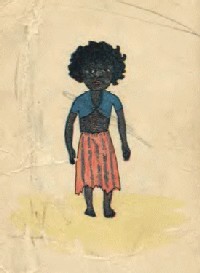
In the Camp Fire chapters, description is sparse and functional: the girls sit on a "hillside grass plot near the white canvas tents." In Book 2, description becomes elaborate and ethnographic. The narrator specifies the Indian youth's "girdle of deerskin," his "leggings reaching to his neat fitting moccasins," and his sister's "robe of doeskin, lined with down from the breast of the wood-pigeon." The shift in density of visual detail is abrupt. The historical narrator also offers explicit commentary on racial appearance—"there are very few worthy of the compliment"—a perspective absent from the modern girls' story. This contrast suggests that the two halves operate under different conventions of realism and authorial stance.

Pacing and the Problem of the Embedded History

The main narrative moves quickly through dialogue and action: Katherine's announcement, the girls' laughter, and a vote to pursue a new adventure. Chapters are short, with titles like "A Special Meeting Called" and "The Girls Vote 'Aye.'" Book 2, however, slows to a measured, expository pace. The narrator takes time to describe the canoe, the river, and the appearance of the brother and sister, and even pauses to address the reader directly: "By and by I shall mention the name of this famous miss." This pacing change may disorient a reader expecting the brisk, conversational style of the opening. The historical section also includes a footnote-like aside about "puccoon, or blood root," further emphasizing its documentary ambition.

Readers should be aware that this volume contains two distinct works with different narrators, styles, and implied audiences. The Camp Fire Girls story and the historical romance are not interwoven but presented sequentially. The transition occurs without explicit framing, so the shift in voice and period may require adjustment. Pay attention to the chapter headings and the change from present-tense dialogue to past-tense historical narration. The book rewards those who enjoy both modern girls' series fiction and early twentieth-century historical adventure writing.

That rainy afternoon, I kept returning to the editor's note about the Club girls pausing mid-adventure for Pocahontas’s older story, the modern voice suddenly thin against that older one. It made me think of other quiet histories tucked inside loud ones. I found myself later holding Queer Stories for Boys and Girls — Key Ideas to Explore, remembering how some truths only whisper when we finally listen.

Sophia Williams
1 month ago

Luke Thompson
3 weeks ago

5
5 out of 5 (2 User reviews )

Add a Review

Your Rating *
  • ...
    Joshua Victoria Olson - 3 weeks ago
    {'reviewType': 'positive', 'content': "This charming tale of the Campfire Girls at Lake Camp is a delightful blend of adventure and friendship. The girls' quest for new experiences is both inspiring and heartwarming, with beautiful descriptions of nature that make you feel like you're right there beside them. It's a classic that encourages courage and curiosity, perfect for young readers who love outdoor escapades."}

  • ...
    Danielle Watson - 3 weeks ago
    {'reviewType': 'neutral', 'content': 'A sweet story that captures the spirit of camp life and the bonds formed between the girls. The plot is engaging, but the pacing can be a bit slow in the middle as the adventures are not as action-packed as the title suggests. Still, it offers wholesome entertainment and lovely nature imagery.'}

  • ...
    Marissa Chandler - 3 weeks ago
    {'reviewType': 'negative', 'content': "While the book has a nostalgic charm, it lacks the depth and excitement of more modern adventure stories. The characters are rather one-dimensional, and the 'searching for new adventures' plot feels repetitive and underwhelming. It might bore readers accustomed to faster-paced narratives. A decent read for history fans, but not a standout."}


Reader reflection

How will you remember this book?

Save your reaction, strongest insight, and memorable passage.

Your progress 0 / 10
1

Which reading stage best describes you?

2

How did the book work for you overall?

3

How likely are you to recommend this book?

4

What was the reading difficulty like?

Related eBooks