1

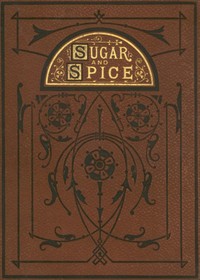
Sugar and Spice: Comical Tales Comically Dressed — A Reader’s Guide
(0 User reviews)
909
Project Gutenberg
2004
Not confirmed
Children's poetry; Conduct of life -- Juvenile fiction; Children's stories; Children -- Conduct of life -- Juvenile fiction; Wit and humor, Juvenile
Readers of public-domain and historical texts
Project Gutenberg digital edition
en
Edition facts
Words
6,352
Reading time
28 min
Text sections
1
The catalog record for Sugar and Spice: Comical Tales Comically Dressed — A Reader’s Guide provides practical reading context through 6,352 words, 28 min estimated reading time, and 1 detected text section.
The text analysis averages about 20.8 words per sentence, while the detected sections provide another way to judge how the source is divided.
Project Gutenberg metadata also associates the work with “Children's poetry,” connecting these edition facts with the source record’s subject description.
Source:
Project Gutenberg record #10839
James Johnson's 19th-century children's book uses playful verse and prose to depict children's imaginative play, with a focus on the author's choices in diction, dialogue, and description that create comical, moralistic tales.
Read the complete public-domain text at its original source.
Read on Project GutenbergJames Johnson's Sugar and Spice: Comical Tales Comically Dressed opens with a party where children cast lots to decide who will serve, and the lot falls on T. Good. The verse immediately establishes a playful, rhythmic voice: “They rang the bell, he never came; / They called, he would not hear.” The author’s diction—words like “welting” and “lasts” in the bootmaker tale—grounds the fantasy in specific trades. Dialogue, such as the cobbler’s threat to “knock their heads together with his lasts,” reveals character through blunt, colloquial speech. These choices shape a world where children mimic adult roles with earnest, comical precision.
Verse and Prose: A Dual Structure
The book alternates between rhyming verse and prose narratives, each serving a distinct purpose. The opening poem, “Sugar and Spice,” uses a regular meter and couplets to tell a self-contained story about a servant named T. Good. The verse’s rhythm reinforces the moral: “Now mind and do as you are bid, / Or you’ll come in for blame.” In contrast, the prose tales, such as “The Little Bootmaker,” unfold with more detailed description and dialogue. The shift in form allows Johnson to vary pace—verse for quick, moral lessons; prose for extended, humorous scenarios. The bootmaker story, for instance, describes Franky’s meticulous process: “He measured her, and cut out his vamps, sides, linings, welts, soles, and heels.” This technical vocabulary, absent from the verse, grounds the play in real craftsmanship.
Dialogue as Character and Comedy
Johnson uses dialogue to define characters and generate humor. The cobbler’s gruff independence emerges in his threat: “if they brought him two pairs again to do at once, he’d knock their heads together with his lasts, and then give them a good ‘welting.’” The phrase “good ‘welting’” puns on a shoemaker’s technique and a beating, blending trade jargon with menace. In “The Young Sportsman,” Robert’s affected military speech—“Haw! hem! sir!” and “I see, haw! a speck of rust on one of your buttons, haw! as big as the tip of a fly’s eyelash!”—mocks pretentious authority. The repetition of “haw!” and the absurdly small speck create a caricature of officiousness. Mrs. Graham’s mimicry of Robert’s “Present, Fire!” turns his own language against him, underscoring the lesson through verbal echo.
Description of Play: Tools and Toys
Johnson’s descriptions of children’s play emphasize the tools and materials they use. In “The Little Bootmaker,” Franky buys “tools and leather” and cuts “vamps, sides, linings, welts, soles, and heels.” The list of parts mirrors a real cobbler’s vocabulary, lending authenticity to the game. Similarly, “The Little Soldiers” describes “beautiful sets of boxes of soldiers” and the dog “Billy, the dog, sniffed at the butt of the musket to make quite sure that it was not loaded.” The dog’s action anthropomorphizes caution, while the soldiers’ destruction by gunpowder—a “tremendous ‘pop,’ followed by a ‘puff’”—ends the play with a literal bang. These details show Johnson’s interest in the physical objects of childhood, from lasts to toy muskets, as props for moral and comedic scenes.
Moral Lessons Embedded in Comedy
The book’s moral lessons are delivered through comedic consequences rather than direct preaching. In “Sugar and Spice,” T. Good initially refuses to work, but after being “coaxed…with marmalade,” he relents and runs errands. The lesson—obedience brings reward—is implicit in the happy ending. More pointedly, in “The Little Soldiers,” the mother destroys the boys’ toy soldiers after they order uniforms without permission. Her action is both punishment and parody: she mimics Robert’s command “Present, Fire!” and sets off gunpowder, leaving “not a bit of one of all those soldiers and horses left.” The boys’ tears and her threat to send them to school “in those soldiers’ suits” combine humor with a clear message about authority and consequences. Johnson avoids heavy-handedness by letting the absurdity of the punishment carry the moral.
Readers attentive to Johnson’s craft will notice how he layers meaning through word choice and rhythm. The verse’s sing-song quality contrasts with the prose’s detailed realism, while dialogue reveals character flaws through exaggeration. The book rewards careful reading of its small details—the cobbler’s “welting,” the dog’s sniff, the mother’s mimicry—as keys to its comedic and moral design. These choices make Sugar and Spice a compact example of how 19th-century children’s literature balanced entertainment with instruction.
Rereading Sugar and Spice, I paused on how Johnson catches the exact cadence of a child’s made-up game—the half-sung threats, the gleeful logic. That same stray rhythm surfaced weeks later in my own margin notes, and I found myself reaching for this little companion volume, Tell Me a Story — Reading Notes, as if the two had always meant to sit side by side on the shelf. Strange how certain voices echo.
There are no reviews for this eBook.
There are no comments for this eBook.
Reader reflection
How will you remember this book?
Save your reaction, strongest insight, and memorable passage.
Your progress
0
/
10
2
How did the book work for you overall?
3
Would you encourage someone else to read it?
4
Did the language feel accessible?
5
Did it raise ideas you would like to talk about?
6
Did anything about the book feel genuinely new?
7
What was the strongest part of the book?
8
How well did it match your expectations?
9
In one sentence, what did you learn?
10