
Foxholme Hall, and Other Tales — Themes and Context
Edition facts
Calculated from edition completeness, EPUB availability, text structure and catalogue metadata. Not a user rating.
Read the Text
Hugh was a regular fine little chap, manly, independent, and yet very amiable. He might have been rather spoilt, because it was a hard matter not to make a good deal of him. People couldn't help thinking of him as the long-wished-for heir of the old place and the old title, and what joy he had brought to Sir Hugh's heart and what pride and satisfaction to that of his mother, and that he would some day be the master of Foxholme (all hoped that day might be far distant); and they prayed that he might worthily represent his honoured father.
After all, however, there was no one we thought so much about as Cousin Peter. How full of life and spirits and fun he was! A shade, however, of gravity or melancholy occasionally stole over him. He had an inner deeper life of which we boys knew nothing. We used to be surprised, after he had been playing all sorts of pranks with us, to go and see him sit down as grave as a judge along with Sir Hugh, and talk as seriously as anybody else. Then he would jump up and say something quiet and confidential to some young lady, and crack a joke with some old one; and again he would be back among us, baiting the bear, standing on his head, or doing some other wonderful out-of-the-way thing. I remember that even then I more than once remarked that whenever he drew near our Cousin Julia, there was a greater sobriety and a wonderful gentleness and tenderness in his manner; and often, when she was not looking, and he thought no one else was looking, his eyes were turned towards her with a look which older people would easily have interpreted. I thought myself, "He must be very fond of her; but that is but natural--everybody is."
STORY ONE, CHAPTER TWO.
I should like to give a full description of the events of those never-to-be-forgotten Christmas holidays. Besides ourselves, we had two cousins and the sons of some of Sir Hugh's friends, and no end of grown-up guests, young ladies and their mammas and papas, and several gentlemen who were in no ways stiff or distant, and we didn't mind saying what we liked to them. I remember that Christmas-day--how happily it began--how, on a fine frosty morning, we all walked to the village church--how we found it decked with hollies, reminding us that, even in mid-winter, our merciful God never withdraws His blessings from the earth--how we could not help listening with attention to the sermon of the good vicar, who reminded us that we were assembled to commemorate the greatest event that has occurred since the creation of the world. He bid us reflect that the Christ who was on that day born into the world, a weak helpless infant, prepared to endure a life of toil, of poverty, and of suffering, and at the same time of active unwearied usefulness, was our Lord the Son of God himself; that He took our sins upon Him, shed His blood on the Cross, suffering agony and shame, which we had merited, that He might wash our sins away; died and was buried, that He might, though sinless himself, for our sakes endure the curse sin brought on mankind, and thus accomplish the whole of the work He had undertaken to fulfil; how He rose again, ascending into Heaven triumphant over death, that He might then, having lived and suffered as a man on earth, feeling for our infirmities, plead effectually for us; that He had suffered the punishment due to us, before the throne of the Almighty, an offended but a just and merciful God, full of love to mankind.
I never before understood so clearly that the whole work of redemption is complete--that Christ has suffered for us, and that, therefore, no more suffering is required. All we have to do is to take advantage of what He has done, and put our whole faith and trust in Him. The vicar then described most beautifully to us how Christ lived on earth, and that He did so that. He might set us an example, which we are bound in ordinary love and gratitude to imitate, by showing good-will, love, kindness, charity in thought, word, and deed, towards our fellow-men. How beautiful and glorious sounded that Christmas hymn, sung not only by all the school-children, but by all the congregation. Sir Hugh's rich voice, old as he was, sounding clearly among the basses of the others. He did his best, and he knew and felt that his voice was not more acceptable at the throne of Heaven than that of the youngest child present. Then, when service was over, Sir Hugh came out arm-in-arm with our aunt, followed by Julia and little Hugh, and talked so friendly and kindly to all the people, and they all smiled and looked so pleased, and replied to him in a way which showed that they were not a bit afraid of him, but knew that he loved them and was interested in their welfare; and Lady Worsley and Cousin Julia talked in the same kind way, and knew everybody and how many children there were in each family, and asked after those who were absent--some at service, and some apprentices, and some in the army or at sea. Master Peter also went about among them all, and seemed so glad to see them, and shook hands with the old men, and joked in his quiet way with the old women. He contrived to have a word with everybody as he moved in and out among them. Then the vicar came out, and a few friendly loving words were exchanged with him too.
"We shall see you and Miss Becky at dinner as usual, Mr Upton," said Sir Hugh, as they parted.
"I should be sorry to be absent, Sir Hugh. On twenty-nine Christmas-days have we taken our dinner with you, and this will make the thirtieth, if I mistake not," answered the vicar.
"Ah, time flies along, and yet Miss Becky does not, at all events, remind us of it," said Sir Hugh. Whereat Miss Becky, who was very fair and somewhat fat, laughed and shook hands heartily with Sir Hugh and Lady Worsley, and smiled affectionately at Julia and little Hugh, and we commenced our homeward walk. How enjoyable it was--how pleasant was, our light luncheon! for we dined at five that we might have a long evening. We all looked forward to the evening with great delight. Scarcely was dinner over than a sound was heard--a bell in the hall striking sweetly. We all jumped up, led by Master Peter, and arranging ourselves, some on the great oak staircase and others in a circle at its foot, we stood listening to the Christmas chimes and other tunes struck up by a dozen or more men with different-toned bells--one in each hand. Scarcely had they ceased and received their accustomed largesse from Sir Hugh's liberal hands, than some young voices were heard coming up the avenue. They, as were the rest, were admitted at a side-door, through the servants' hall, where tea and ale, and bread-and-cheese, and cakes, and other good things, were ready to regale them. The young singers came trooping into the hall, one pushing the other forward; shy and diffident, though they well knew that they had no reason to fear the lord of that mansion nor any one present. At length they arranged themselves, and the leader of the band beginning, they all chimed in, and sang, if not in a way to suit a fastidious taste, at all events, with feeling and enthusiasm, a beautiful Christmas carol. The words are simple, but often as I have heard them I have never failed to feel my heart lifted up to that just and merciful God who formed and carried out that great and glorious work, the scheme of the Redemption, thus wonderfully reconciling the demands of justice with love and mercy towards the fallen race of man. Surely this is a theme on which angels must delight to dwell, and to which they must ever with joy attune their voices and their harps; so I used to think then and so I think now, and hope to think till I reach the not unwelcome grave, and find it a happy reality. Several hymns and other appropriate songs were sung by the children, and then the leader began to sidle towards the door, while the rest nudged and elbowed each other, and at length they all shuffled demurely out again, but not a minute had passed before they were heard shouting and laughing right merrily in the servants' hall. Their places were quickly supplied by a very different set of characters. They were dressed with cocked hats and swords, and uniforms of generals and princes, which, though highly picturesque, were not of a very martial character, or calculated to stand much wear and tear, being chiefly adorned with coloured paper and tinsel. The tones of their voices showed that, notwithstanding the lofty-sounding names they assumed, they were not of an aristocratic rank, nor, though they all spoke in poetry, was that of a very marked order. There was Julius Caesar, and Mark Antony, and Caractacus, and the Black Prince, and King Arthur, and Richard the Third, the Emperor Alexander, Marshal Blucher, and several other heroes, ancient and modern, including Napoleon Bonaparte and the Duke of Wellington. Some were tall, and some were short, and some fat, and others thin, and I had, even then, strong doubts whether they bore any similarity to the heroes they represented as to figure, while, certainly, they were not in any way particular as to correctness of costume. One little chap, who was evidently looked upon as a star, came forward and announced that he was Julius Caesar, and a short time afterwards he informed us that he was Marshal Blucher. Having marched round the hall in a very amicable way, they ranged themselves in two parties opposite each other. One hero on one side defying another on the other, they rushed forward and commenced, in the ancient Greek and Trojan fashion, a furious verbal combat, always in verse, the last lines in one case being:
"I tell thee that thou art but a traitrous cheat, So fight away, or I will make thee into mince-meat."
They were not in the least particular as to who should fight one with the other. Julius Caesar and the Black Prince had a desperate combat, and so had Mark Antony and King Arthur, the two British heroes coming off victorious, and leaving their opponents dead on the field. The most terrific combat was that between the Duke of Wellington and Napoleon Bonaparte. For folly five minutes they walked about abusing each other in the most unmeasured versification, I was going to say language, flourishing their swords, and stamping their feet. They put me much in mind of two turkey-cocks preparing for a fight. It might be remarked also that in this, as in the previous instances, the modesty of the heroes did not stand in their way, when singing their own praises:
"I am that hero, great and good, Whom France and Frenchmen long withstood. I beat them all well out of Spain And I will beat them all again. And Bony, as you know 'tis true, I thrashed thee well at Waterloo So if you have not had enough, All will allow you're very tough; Come on, I say, I do not mind thee, For as I was, you still will find me."
Thus spoke the great Duke of Wellington. Bony answered in a similar, only in a somewhat more abusive strain, when, throwing the sheaths of their swords on the floor, they commenced a furious and deadly combat. At length Napoleon was slain; but, somewhat outraging our school notions of history, Julius Caesar rushed forward to avenge his death. He, however, got more than he expected, and was soon laid alongside Bony. One hero after another rushed forward, but all were finally slain, and the Iron Duke remained master of the field. He, however, overcome by fatigue and numberless wounds, sunk down at last, and died also. Now a new character appeared at the door, in the person of a doctor, with a long nose and a stick, which he held constantly to it. Having explained who he was and what he would do, or rather what very few things he couldn't do, he produced a huge snuff-box from his pocket, and first approached the slain hero of Waterloo, saying,--
"Take some of my sniff-snuff, Up thy riff-ruff, And rise up, brave Duke of Wellington."
Up jumped the Duke with wonderful agility, and began dancing about right merrily. The same words produced a similar effect on all the late combatants, and, the doctor helping them up, they were all soon dancing and jumping about as merrily as the Duke. This amusement was of short duration, and a moral was taught us as to the brevity of all worldly happiness, for suddenly, the door bursting open, in rushed a huge figure like a moving holly-bush, but it had a head and arms and legs. It was of an allegorical character, intended to represent Time; but, instead of a scythe, the arms held a broom, by lustily plying which, he speedily swept all the heroes and the great doctor off the stage. These mummers, as they are called in that part of the country, always used to excite my warmest admiration. We used to call them jiggery-mummers at Foxholme, because they danced or jigged in the peculiar fashion I have described. They are a remnant of the morris-dancers of olden days. They were generally called on to repeat this play in the servants' hall, and often in my younger days did I steal down to witness the exhibition. This closed the public amusements of the evening. The evening of that holy day at Foxholme was always spent in a quiet, though in a cheerful way. Sir Hugh would have preferred having the mummers perform on another day, but the custom was so ancient, and the people were so opposed to the notion of a change, that he permitted it to exist till he could induce them to choose of their own accord another day. We spent a very pleasant, happy evening, and we knew that for the next day Master Peter had prepared all sorts of games for our amusement. Little Hugh had been with his mother watching the mummers, and highly amused, giving way to shouts of hearty laughter. Then he ran off to Julia, while Lady Worsley was attending to some of her guests; next he attached himself for a time to Master Peter, and from him made his escape into the servants' hall to witness the mummers' second representation. I remember that Jack and I, with several other boys, went out before returning into the drawing-room to smell the air, and to discover if there was a frost. How pure and fresh and keen it was. The gravel on the walk felt crisp as we trod on it. The stars in countless numbers shone with an extraordinary brilliancy from the dark cloudless sky. There was no doubt about a frost, and a pretty sharp one too, and our hopes rose of getting sliding, skating, and snowballing to our hearts' content. While we were standing with our faces turned towards the park, I remember that Jack, who had a sharp pair of eyes, said that he saw a deer running across it. We declared that it must have been fancy, as it was difficult to make out an object through the darkness, except it was against the sky, at a distance even of twenty yards. As we had run out without our hats, we very quickly returned into the warm house.
STORY ONE, CHAPTER THREE.
We were sitting round Master Peter, listening to an account he was giving us of a trip he once made, when a midshipman, through Palestine, when the drawing-room door opened, and Mrs Moss, little Hugh's nurse, appeared, to beg that he might be sent up to bed. There was nothing unusual for Nurse Moss coming for Master Hugh, who always objected to be sent off to bed, but I saw Lady Worsley turn suddenly pale.
"Why, nurse, I thought that he had gone to you nearly half an hour ago," she exclaimed. "He has not come into the drawing-room since the mummers were here. Oh! where can he be?"
The opening of Foxholme Hall, and Other Tales immediately establishes a contrast between two holiday options: a prim, pokerish fortnight in Russell-square with Cousin Barbara, or the jolly fun of Foxholme Hall in the New Forest. The narrator and his brother Jack choose Foxholme without hesitation, and the text launches into a detailed, sensory description of their coach journey—the Telegraph, driven by the polished Taylor with his Roman nose and white great-coat. The boys' exuberant spirits and pea-shooters set a tone of boisterous adventure, but the collection also includes a fantastical sea-spirit council where Neptune summons Borasco and other monarchs of the deep. This juxtaposition of grounded, period-specific travel and mythological ocean governance is a key structural tension.
Coach Travel and Period Detail
The narrative invests heavily in the texture of early-nineteenth-century coaching. The Telegraph coach is described with precision: four white horses, a driver named Taylor who looks fit to command an army, and a polished appearance from hat to boots. The boys recall another coach, the Independent, and Collier's old coach that carried six inside, where they once traveled with four old ladies eating apples and drinking gin. These details are not mere backdrop; they anchor the story in a specific historical moment and social milieu. The boys' pea-shooter attack on a lumbering vehicle, and their rapid departure like a flash of lightning, reinforce the reckless energy of youth. The shift to a slower coach at Southampton, then the pony-carriage driven by Sam Barnby, marks a gradual transition from public transport to the private, familial world of Foxholme. This layering of transport modes—public coach, private carriage—mirrors the collection's movement between ordinary life and extraordinary events.
The Sea-Spirit Council and Neptune's Realm
In stark contrast to the opening's terrestrial adventures, later tales introduce a submarine court. Neptune sits in state on his throne, Tritons before him, and summons spirits from across the ocean: the King of the Whales, the King of the Sharks, the King of the Porpoises, the King of the Dolphins, the King of the Cat-fish, and the King of the Big Sea Serpents. Each reports on his activities—the Whale king protects his subjects by crushing ships with ice; the Shark king sinks vessels for food; the Cat-fish king advises making themselves disagreeable to avoid capture. The monarch of the Big Sea Serpents keeps his subjects out of sight, explaining their rarity. Among them, the Spirit of Britannia appears, more beautiful and majestic, reporting that she has watched over the island, finding the women good and beautiful, the men brave and hardy. Neptune declares that as long as they remain faithful to him, keep their fleets manned, and refuse foreign interference, Albion shall be his favoured isle. This allegorical passage blends imperial patriotism with mythological fantasy, presenting a structured hierarchy of sea creatures and spirits.
Tensions Between Realism and Fantasy
The collection's two poles—the detailed, realistic coaching scenes and the formal, allegorical sea-spirit convocation—create a productive tension. The opening chapters are grounded in specific, almost documentary observations: the coach's name, the driver's appearance, the boys' mischief. In contrast, the sea-spirit council is highly stylized, with Neptune's verse summons and the formal reports of each king. The Spirit of Borasco, absent from his throne, is summoned by Neptune's words that reach him thousands of miles away. This shift from the particular to the cosmic, from the boys' immediate sensory world to a mythological order, suggests that the collection is not simply a series of adventure tales but an exploration of different modes of storytelling. The reader moves from the tangible excitement of a coach journey to the imagined governance of the ocean, where natural forces are personified and national destiny is proclaimed. This juxtaposition invites consideration of how adventure can be both domestic and epic, realistic and fantastical.
Readers approaching Foxholme Hall, and Other Tales should attend to the shifts in register between the opening's lively, period-specific narration and the later tales' formal, allegorical fantasy. The collection does not maintain a single tone or genre; instead, it moves between the concrete and the mythic. Noting how Kingston handles these transitions—whether through abrupt juxtaposition or gradual modulation—can illuminate the work's broader ambitions. The excerpts suggest a writer experimenting with different narrative voices, from the colloquial to the ceremonial, within a single volume.
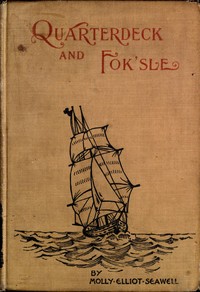
There’s a moment in Foxholme Hall when the cozy glow fades, and the sea’s wild summons takes over. It made me think of winters I spent a little lost, then found my way back to another kind of shelter—the salt-stained tales in Quarterdeck and Fok'sle: Stories of the Sea — Story, Setting & Ideas. Both books hold that hush before the next wave. I remember every one.
Noah Hall
1 month agoHenry Miller
3 weeks agoAvery Jackson
3 weeks agoMatthew Ramirez
2 weeks agoHow will you remember this book?
Save your reaction, strongest insight, and memorable passage.
Emma Mitchell
3 weeks ago