1

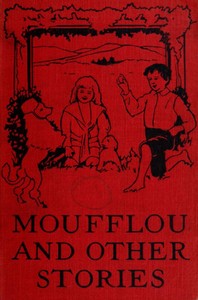
Moufflou, and other stories — Themes and Context
(0 User reviews)
1711
Project Gutenberg
2025
Not confirmed
Dogs -- Juvenile fiction; Children's stories, English -- 19th century; Conduct of life -- Juvenile fiction; Pride and vanity -- Juvenile fiction; Pigments -- Juvenile fiction; Roses -- Juvenile fiction
Readers of public-domain and historical texts
Project Gutenberg digital edition
en
Edition facts
Words
19,330
Reading time
85 min
Text sections
8
The source record for Moufflou, and other stories — Themes and Context measures this digital text at 19,330 words, 1 hr 25 min estimated reading time, and 8 detected text sections.
The text analysis averages about 23.1 words per sentence, while the detected sections provide another way to judge how the source is divided.
Project Gutenberg metadata also associates the work with “Dogs -- Juvenile fiction,” connecting these edition facts with the source record’s subject description.
Source:
Project Gutenberg record #75655
In four animal tales, Ouida contrasts pride and humility through a clever poodle, a scorned pigment, a vain rose, and a loyal dog, using vivid studio and garden settings.
Read the complete public-domain text at its original source.
Read on Project GutenbergOuida’s collection opens with a poodle named Moufflou, whose cleverness is established through a series of small, precise actions: he fetches, carries, and performs tricks for the poor but merry children who own him. The narrative voice shifts between affectionate observation and a wry, almost theatrical sympathy for its animal and object protagonists. In the second story, the reader enters a painter’s studio where colors in tubes gossip like courtiers, and Lampblack—a neglected pigment—longs for purpose. The stories share a structure that moves from humble beginnings to a moment of transformation or recognition, often through a reversal of fortune. Recurring images of dust, cobwebs, and confinement give way to light, color, and movement, as when Lampblack is finally taken up by the master’s hand.
From Studio to Garden: The Movement of Scenes
The collection’s settings shift between enclosed, domestic spaces and open, natural ones. Moufflou’s story begins in a “dark, tumble-down place” and moves to the garden where Tasso works. The second story is confined almost entirely to a painter’s studio, with its shelves of pigments and brushes, until Lampblack is carried outside to become a signpost. The third story, about a rose, likely unfolds in a garden, while the final tale returns to a more expansive landscape. This alternation between interior and exterior mirrors the characters’ inner journeys: from obscurity or confinement to visibility and purpose. The studio, with its “flood of light” when the master enters, becomes a stage for transformation, while the garden offers both freedom and exposure to the elements.
Recurring Images: Dust, Cobwebs, and Light
Ouida uses a consistent set of images to mark a character’s low point and subsequent elevation. Lampblack lies under “spiders’ webs” and is “growing as gray as an old bottle” before the master finds him. The spiders, “not companionable creatures,” retreat when the master arrives. Light is a recurring signal of change: the studio door opens to “a flood of light,” and the master’s step makes the colors’ hearts “jump for joy.” In Moufflou’s tale, the children’s poverty is described through darkness and decay, but their merriment provides a kind of inner light. These images create a visual shorthand for neglect versus care, and they tie the stories together across different subjects—dog, pigment, rose, and dog again.
Voice and Perspective: Sympathy for the Overlooked
Ouida grants interiority to a pigment, a palette-knife, and a poodle, using free indirect discourse to convey their hopes and disappointments. Lampblack “could not believe his senses” when the master picks him up, and he dreams of “all the scenes he would be in.” The colors mock him with the name “Deposit,” a word he finds hurtful because it is “unintelligible.” This focus on the misunderstood or overlooked extends to the children in the first story, who are poor but “very merry.” The narrator’s tone is often gently ironic, as when the colors’ “little tin helmets” shake with laughter. By centering characters who are usually marginal—a crippled boy, a discarded pigment, a signpost—Ouida invites readers to reconsider what is valuable.
Structure: The Arc of Humiliation and Redemption
Each story follows a similar arc: a character is undervalued or scorned, experiences a moment of despair, and then is unexpectedly elevated or given purpose. Moufflou, though clever, is owned by poor children; Lampblack is mocked as “Old Deposit”; the rose is likely proud and isolated. The turning point often involves a master or authority figure who recognizes worth. For Lampblack, the master’s words—“You will do for this work”—transform his status, even if the work is a mere signpost. The word “BANDITA” becomes a kind of crucifixion, but also a role. This pattern suggests a moral about humility and service, but Ouida undercuts sentimentality with sharp details: the spiders chuckle, the colors titter. The endings are not uniformly happy; they are ironic or ambiguous, leaving room for the reader to judge.
Readers attentive to the interplay of voice and image will find that Ouida’s stories reward close attention to small details—the way a dog’s trick is described, or the exact shade of a pigment’s envy. The collection’s brevity (eight sections, under 20,000 words) makes it possible to trace these patterns across all four tales in a single sitting. Consider how the opening story’s emphasis on cleverness and poverty sets up expectations that the later stories complicate, especially when the point of view shifts from a dog to a tube of paint.
Sometimes a story stays because it asks something gentle of us, like Moufflou and its quiet contrast between showing off and simply being loyal. That same tender unease lingered with me after The Story of Little Black Sambo, and The Story of Little Black Mingo — Story, Setting & Ideas—the way courage folds into grace, without ever raising its voice. I think of them both on gray afternoons.
There are no reviews for this eBook.
There are no comments for this eBook.
Reader reflection
What did you think of this book?
Answer a few questions and save a private reflection on this device.
Your progress
0
/
10
2
How did the book work for you overall?
3
How likely are you to recommend this book?
4
What was the reading difficulty like?
5
Did it raise ideas you would like to talk about?
6
Did the book offer a fresh perspective?
7
What was its emotional impact?
8
Was the book easy to understand?
9
In one sentence, what did you learn?
10