1

Oscar; Or, The Boy Who Had His Own Way — Inside the Classic
(0 User reviews)
437
Project Gutenberg
2006
Not confirmed
Conduct of life -- Juvenile fiction; Children's stories; Boys -- Juvenile fiction; Boston (Mass.) -- Juvenile fiction; Obedience -- Juvenile fiction
Readers of public-domain and historical texts
Project Gutenberg digital edition
en
Edition facts
Words
63,902
Reading time
278 min
Text sections
8
This digital edition of Oscar; Or, The Boy Who Had His Own Way — Inside the Classic is described by source-level measurements including 63,902 words, 4 hr 38 min estimated reading time, and 8 detected text sections.
The text analysis averages about 20.3 words per sentence, while the detected sections provide another way to judge how the source is divided.
Project Gutenberg metadata also associates the work with “Conduct of life -- Juvenile fiction,” connecting these edition facts with the source record’s subject description.
Source:
Project Gutenberg record #18153
This editorial note examines Walter Aimwell's 1854 moral tale about a headstrong Boston boy, focusing on the author's use of direct dialogue, domestic settings, and repeated disobedience to illustrate the consequences of a wayward spirit.
Read the complete public-domain text at its original source.
Read on Project GutenbergWalter Aimwell opens Oscar; Or, The Boy Who Had His Own Way not with a grand adventure but with a kitchen dispute. The first chapter, titled “A Kitchen Scene,” immediately establishes the author’s method: moral instruction through everyday domestic conflict. Oscar’s imperious demand for pie, Bridget’s flat refusal, and the ensuing squabble set a pattern of disobedience that recurs throughout the excerpts. Aimwell relies on direct dialogue to reveal character—Oscar’s “I don’t want to” and his mother’s weary commands—rather than authorial commentary. The setting is confined to home, school, and neighborhood, grounding the lessons in recognizable, unromantic situations.
Dialogue as a Window to Character
Aimwell uses dialogue not merely to advance plot but to expose Oscar’s willfulness and the family’s ineffective responses. When Oscar returns with wet feet, his mother orders him to change clothes: “Come, do you hear me? Run up to your chamber and put on some dry clothes.” Oscar’s reply—“I don’t want to change my pantaloons and stockings”—is a flat refusal, and the narrator notes that “such instances of disobedience were too common in the family to attract any special notice.” The author lets the exchange stand without moralizing, trusting the reader to see the pattern. Later, on the ice, Oscar’s bravado emerges in dialogue: “I ’m in for a sail, and if the rest of you back out, I shan’t.” His words contrast with the other boys’ alarm, highlighting his recklessness. Aimwell’s dialogue is naturalistic for the period, avoiding stilted moral speeches; instead, the characters speak in ways that reveal their flaws and the dynamics of the household.
Recurring Motifs of Disobedience and Its Consequences
The excerpts show a clear structural pattern: Oscar disobeys, faces a minor crisis, and is rescued or escapes without lasting reform. In the ice episode, his defiance leads to a dangerous float down the Charles River, yet the narrative does not depict a dramatic punishment. Aimwell’s choice to repeat this cycle—wet feet, cold, disobedience, near-disaster—suggests a didactic purpose: to show that wayward habits accumulate. The author also uses the dog Tiger as a silent foil; while the boys panic, Tiger looks on “with an expression of curiosity,” a subtle reminder of instinct versus learned stubbornness. The preface states the book is “designed to exhibit some of the bad consequences of acquiring a wayward and lawless spirit,” and the excerpts bear this out through repeated, escalating incidents rather than a single moral lesson.
Domestic and Urban Settings as Moral Arenas
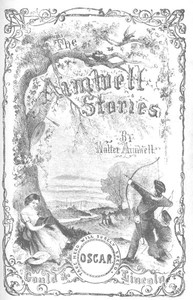
Aimwell situates Oscar’s moral struggles in specific, mundane locations: the kitchen, the schoolroom, the streets of Boston, and the shores of the Charles River. The frontispiece depicts a “Winter Scene on Boston Common,” grounding the story in a recognizable urban landscape. The author uses these settings to create natural opportunities for choice—Oscar decides to play on the ice, to disobey his mother, to lead his friends into danger. The river is not a romantic wilderness but a place where boys “amuse themselves” with ice cakes, and the danger is practical (getting wet, floating away) rather than fantastical. This realism aligns with the advertisement’s promise to portray “quiet, natural scenes and incidents of everyday life.” By avoiding exotic or adventurous backdrops, Aimwell emphasizes that character is tested in ordinary places, making the moral lessons more applicable to his young readers.
The Author’s Narrative Voice and Moral Framework
Aimwell’s narrator is unobtrusive but purposeful. He reports actions and dialogue with minimal commentary, allowing the events to speak for themselves. For instance, after Oscar refuses to change his clothes, the narrator simply states: “Mrs. Preston said nothing more about the matter.” The lack of authorial scolding is notable; the lesson emerges from the consequences Oscar faces. The preface and advertisement, however, make the moral aim explicit: the book is “designed to exhibit some of the bad consequences of acquiring a wayward and lawless spirit.” This dual approach—overt framing in paratexts, restrained narration in the story—reflects a deliberate pedagogical strategy. Aimwell trusts that repeated examples of disobedience and its mild repercussions will instruct more effectively than direct sermonizing. The result is a work that balances entertainment with instruction, as promised in the advertisement’s goal to “mingle amusing, curious, and useful information with the moral lessons conveyed.”
Readers approaching Oscar should attend to the small, cumulative details of domestic life and dialogue. Aimwell’s craft lies not in dramatic twists but in the patient accumulation of scenes that reveal character. The book rewards attention to how Oscar speaks, how his parents respond, and how the setting shapes his choices. This is a story best read as a series of moral vignettes rather than a tightly plotted novel.
Reading about Walter Aimwell's stubborn Boston boy, I remembered my own headstrong summers, and how my mother finally let me learn things the hard way. That same quiet ache of consequence came back to me with Poor Blossom: The Story of a Horse — Inside the Classic, where patience isn't preached but simply worn down, hoof by hoof, until all that remains is a gentler truth.
There are no reviews for this eBook.
There are no comments for this eBook.
Reader reflection
What did you think of this book?
Answer a few questions and save a private reflection on this device.
Your progress
0
/
10
2
How much did you enjoy the reading experience?
3
Is this a title you would suggest to others?
4
What was the reading difficulty like?
5
Did it raise ideas you would like to talk about?
6
How would you rate its originality?
7
What did you appreciate most?
8
Did this book create an emotional response?
9
What changed or sharpened your thinking?
10