1

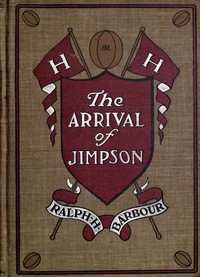
The Arrival of Jimpson, and Other Stories for Boys about Boys — Text and Context
(0 User reviews)
1395
Project Gutenberg
2014
Not confirmed
Conduct of life -- Juvenile fiction; Children's stories; Boys -- Conduct of life -- Juvenile fiction; Sports -- Juvenile fiction; Friendship -- Juvenile fiction; Students -- Juvenile fiction
Readers of public-domain and historical texts
Project Gutenberg digital edition
en
Edition facts
Words
51,123
Reading time
223 min
Text sections
11
The Arrival of Jimpson, and Other Stories for Boys about Boys — Text and Context can be approached with a clearer sense of reading commitment from its source measurements: 51,123 words, 3 hr 43 min estimated reading time, and 11 detected text sections.
The text analysis averages about 14.1 words per sentence, while the detected sections provide another way to judge how the source is divided.
Project Gutenberg metadata also associates the work with “Conduct of life -- Juvenile fiction,” connecting these edition facts with the source record’s subject description.
Source:
Project Gutenberg record #45689
Eleven stories of schoolboy life, athletics, and friendship, set in early 1900s New England. Barbour's narratives move between dormitory debates, baseball fields, and campus bonfires, using recurring images of rain, mud, and team colors to frame boys' struggles with honor, hazing, and parental expectations.
Read the complete public-domain text at its original source.
Read on Project GutenbergRalph Henry Barbour's collection opens not with a boy but with weather: "The rain fell in a steady, remorseless drizzle" onto a crowd awaiting a departing baseball team. That wet, gray scene—glistening car sides, limp flags, blurred windows—sets a pattern. Across these eleven stories, Barbour repeatedly uses weather and physical setting to frame moments of tension or transition. A father-son argument in a Harvard dormitory is staged against a June lawn "intensely green and attractively cool"; a bonfire blazes against a dark campus; a mascot's triumph unfolds on a muddy field. The elements are never mere backdrop. They press on the characters, shaping their moods and marking the stakes of each contest.
Movement Between Indoor and Outdoor Spaces
The stories shuttle between enclosed rooms and open fields, and Barbour often uses that shift to mark a character's change in status or resolve. In the title story, Jimpson first appears as an outsider on a train platform, then moves through a boardinghouse parlor, a schoolroom, and finally a baseball diamond. Each setting alters his reception. The father-son scene in "The Father of a Hero" stays inside a Harvard dormitory, the window framing a Yard full of lounging athletes—a visual contrast between the father's lecture and the son's world. Later stories, like "Barclay's Bonfire," center on an outdoor gathering that becomes a test of loyalty. Barbour rarely lets a scene stay indoors for long; the pull toward the field, the game, the crowd is constant.
Recurring Images of Uniforms and Team Colors
Barbour pays close attention to what boys wear and what those clothes signify. In the opening story, the crowd's umbrellas and rain-coats blend into a mass, but the "crimson sides" of the cars and the "tattered red flag" above Foster's mark allegiance. Later, a boy's straw hat with a "fresh new band" signals belonging. The hero of "The Father of a Hero" is identified by his role as first-baseman and captain, his identity inseparable from his uniform. These details are not incidental; they tell readers who belongs and who is still proving himself. A boy without the right cap or the proper flannel trousers is immediately suspect. Barbour uses these visual cues to establish hierarchy and to show how quickly a boy can move from insider to outcast.
The Structure of the Collection: From Arrival to Début
The eleven stories are arranged to trace a kind of arc, though each is self-contained. The first, "The Arrival of Jimpson," introduces a newcomer; the last, "Mittens," follows a boy making his first appearance in a game. In between, stories cluster around school rituals: hazing ("The Hazing of Satterlee 2d"), a bonfire ("Barclay's Bonfire"), a feast ("Parmelee's 'Spread'"), and a mascot's debut ("Marty Brown—Mascot"). The collection does not follow a single protagonist, but the sequence suggests a progression from arrival to acceptance to performance. Barbour also varies the length and pace: some stories are tight, single-scene sketches; others unfold over several days. This variety keeps the collection from feeling repetitive, even when the themes of loyalty and sportsmanship recur.
Voice and Dialogue as Markers of Character
Barbour gives his boys distinct speech patterns. The father in "The Father of a Hero" speaks in formal, interrupted sentences, punctuated by "sir" and dashes: "I have never," he says, "opposed athletic sports in moderation. On the contrary, I think them—ah—beneficial." His son, the Hero, replies in shorter, more direct phrases. In "The Arrival of Jimpson," the title character's dialogue is sparse at first, then grows more confident as he finds his place. Barbour also uses reported speech and collective voices—the crowd's "fierce clamor," the team's chants—to create a sense of group pressure. Individual voices emerge most clearly in moments of conflict or decision, when a boy must speak up against a friend, a father, or a mob. The dialogue does not merely advance plot; it reveals who has authority and who is still earning it.
Readers will notice that Barbour rarely describes a game in full. He focuses instead on the moments just before—the waiting, the argument, the walk to the field—and the aftermath. The action itself is often compressed into a sentence or two. This technique keeps attention on the boys' relationships and decisions rather than on play-by-play. Approaching the collection as a series of character studies set in athletic surroundings, rather than as sports stories, will reward attention to the small gestures and setting details that Barbour uses to define his world.
Reading about those boys trudging through New England mud, I kept thinking of a quieter season altogether. The rain and team colors felt loud, but their real struggles were inward. It reminded me, oddly, of Summer Days — Themes and Context, where the heat slows everything to a hush. Perhaps both are just about boys finding themselves when no one is cheering.
There are no reviews for this eBook.
There are no comments for this eBook.
Reader reflection
What did you think of this book?
Answer a few questions and save a private reflection on this device.
Your progress
0
/
10
2
What was your overall reaction to the book?
3
How likely are you to recommend this book?
4
How demanding did the text feel?
5
How distinctive were its ideas or approach?
6
How strongly did the book affect you emotionally?
7
Would you like to discuss this book with someone?
8
How would you describe its reading pace?
9
In one sentence, what did you learn?
10