1

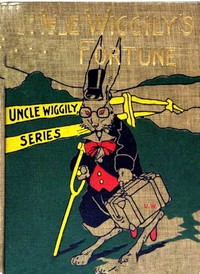
Uncle Wiggily's Fortune — Inside the Classic
(0 User reviews)
1432
Project Gutenberg
2017
Not confirmed
Animals -- Juvenile fiction; Children's stories; Birds -- Juvenile fiction; Seashore -- Juvenile fiction; Rabbits -- Juvenile fiction; Foxes -- Juvenile fiction; Insects -- Juvenile fiction; Uncle Wiggily (Fictitious character) -- Juvenile fiction; Seashore animals -- Juvenile fiction
Readers of public-domain and historical texts
Project Gutenberg digital edition
en
Edition facts
Words
46,153
Reading time
201 min
Text sections
32
Uncle Wiggily's Fortune — Inside the Classic can be approached with a clearer sense of reading commitment from its source measurements: 46,153 words, 3 hr 21 min estimated reading time, and 32 detected text sections.
The text analysis averages about 16.5 words per sentence, while the detected sections provide another way to judge how the source is divided.
Project Gutenberg metadata also associates the work with “Animals -- Juvenile fiction,” connecting these edition facts with the source record’s subject description.
Source:
Project Gutenberg record #54995
In this 1913 children's adventure, Uncle Wiggily Longears, an old gentleman rabbit, searches for fortune with a crutch made from a cornstalk. The narrative voice shifts between playful storytelling and sudden peril, as when an alligator traps him in a hole. A bizarre, mud-covered creature intervenes, showcasing Garis's use of absurd rescues.
Editorial Edition Score
4.8/5
★★★★★
★★★★★
Calculated from edition completeness, EPUB availability, text structure and catalogue metadata. Not a user rating.
How this score is calculated
- Description quality20 pts
- Title & short description10 pts
- Source metadata20 pts
- Text length15 pts
- Chapters / structure15 pts
- EPUB file integrity20 pts
Total of 100 points, scaled to a 2.5-5.0 range. Editions with an empty description or a missing EPUB file are not scored.
Edition quality
Read the complete public-domain text at its original source.
Read on Project GutenbergHoward R. Garis opens Uncle Wiggily's Fortune with a narrator who directly addresses the reader, defining "adventures" as "things happening to you, such as stubbing your toe, or getting lost or things like that." This conversational tone, paired with the rabbit's crutch—gnawed from a cornstalk and painted with raspberry jam—establishes a world where domestic objects and wild threats coexist. The story quickly shifts from cozy description to sudden danger: an alligator corners Uncle Wiggily in a hole he dug while searching for gold. The pace accelerates as a grasshopper flees for help, and a bizarre creature—its tail stuck with burrs, ears decorated with a leaf and Chinese lantern paper—arrives to growl the alligator away. Garis balances the absurdity of the rescue with genuine suspense, leaving the rabbit uncertain whether his savior is friend or foe.
A Narrator Who Winks at the Reader
The storytelling voice in Uncle Wiggily's Fortune is anything but neutral. Garis uses a narrator who interrupts the action with asides, such as when the alligator grins so widely that "it is a wonder the top of his head didn't fly off." The narrator also withholds information for effect: after the muddy creature growls, the text adds, "No, perhaps it's just as well you didn't hear him, or you might have bad dreams." This technique creates a conspiratorial bond with the reader, acknowledging the story's artificiality while heightening tension. The narrator defines terms like "adventures" in a parenthetical aside, treating the audience as novices to the genre. This voice is consistent across the excerpts, using phrases like "sad-like" and "sorrowful-like" to tag emotions with a folksy rhythm. The effect is a reading experience that feels guided rather than merely observed, with the narrator acting as a friendly chaperone through perilous scenes.
Sudden Peril and Absurd Rescues
Garis structures each episode around a rapid escalation from mundane activity to life-threatening danger. In the excerpt, Uncle Wiggily digs for gold on a grasshopper's suggestion; within moments, he is trapped in a hole with an alligator leaning over the edge. The alligator speaks in a "nutmeg-grater voice" and threatens to bite the rabbit "now." The rescue arrives not through the rabbit's own cleverness but through an absurd deus ex machina: a creature so grotesquely decorated—with burrs, mud, a leaf, and Chinese lantern paper—that it frightens the alligator away. The rabbit's internal reaction—"Oh, worse and worse! If the alligator doesn't get me this terrible creature will!"—shows that the rescue does not immediately reassure him. This pattern of sudden peril followed by an improbable, ambiguous savior recurs throughout the book, keeping the reader uncertain whether each new character is helper or threat.
Objects That Bridge Comfort and Chaos
Everyday items in the story carry unusual weight. The crutch, made from a cornstalk and painted with raspberry jam, is both a practical aid and a whimsical artifact. Uncle Wiggily offers it—along with a valise filled with cherry pie—as a bribe to the alligator, treating the crutch as a bargaining chip. The alligator's refusal ("Not for worlds!") underscores that the crutch's value is not universal. Later, the rescuing creature's decorations—a green leaf, red paper, chestnut burrs—are scavenged objects that transform him into a fearsome spectacle. These items are not magical; they are repurposed from the natural and domestic world, suggesting that resourcefulness and appearance can be as effective as strength. Garis uses such details to ground the fantasy in a tactile reality, where a crutch can be gnawed, a pie can be packed, and a leaf can become part of a disguise.
Readers will find that Uncle Wiggily's Fortune rewards attention to its narrative voice, which oscillates between cozy explanation and abrupt crisis. The rabbit's fortune is less a treasure than a series of narrow escapes, each resolved by a character whose motives remain ambiguous. Pay particular attention to how Garis uses the crutch and valise as recurring props; they often reappear in unexpected ways. The book's 32 short chapters make it suitable for reading aloud, with each episode offering a self-contained arc of tension and release.
Years of shelving have shown me how Uncle Wiggily’s Fortune finds its own quiet rescue in unlikely moments, much like the steady, hand-annotated wisdom tucked into Small Means and Great Ends — Reading Notes. Both ask patience of a reader, promising that a stumble—or a muddy stranger—might gently turn toward something like grace.
There are no reviews for this eBook.
There are no comments for this eBook.
Reader reflection
What did you think of this book?
Answer a few questions and save a private reflection on this device.
Your progress
0
/
10
2
What was your overall reaction to the book?
3
Would you encourage someone else to read it?
4
Did the language feel accessible?
5
Did you relate to its people, ideas, or situations?
6
What did you think about the pace?
7
Was the book easy to understand?
8
Could you apply anything you learned?
9
What did this book teach you most?
10