Bill the Minder — A Closer Reading

(1 User reviews)   197
In Category - Fairy Moral Tales
Robinson, W. Heath (William Heath), 1872-1944 Project Gutenberg 2010
Fairy tales; Humorous stories; Children's stories; Voyages and travels -- Juvenile fiction; Kings and rulers -- Juvenile fiction; Babysitters -- Juvenile fiction Readers of public-domain and historical texts
Project Gutenberg digital edition en

Edition facts

Words: 50,006
Reading time: 218 min
Text sections: 8
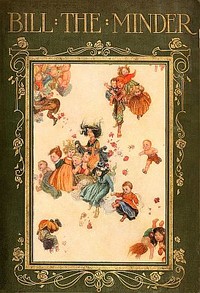
In W. Heath Robinson's whimsical tale, a resourceful boy named Bill minds a chaotic kingdom's inhabitants, leading to absurd adventures with a king, a char-woman, and a parade of eccentric characters, all rendered in the author's famously intricate illustrations.
Share
Editorial Edition Score 4.7/5

Calculated from edition completeness, EPUB availability, text structure and catalogue metadata. Not a user rating.

Edition quality

Read the Text

Everybody was there; the Duke and his Duchess with a handsome bouquet of marigolds and groundsel, presented by the wives of the policemen; the Duchess's cousin, the chatty old Viscount, and his sweet young wife; the stout old Marquis who (as every lady knows) is also admiral of the Regent's Canal, and his six old-maid daughters, who all arrived in bath chairs. The general was there, as a matter of course, with all his medals beautifully polished, and his pockets full of Pontefract cakes and peardrops to throw to the children. At least twelve bishops were present, besides the vicar and his eight kind curates, who made themselves extremely pleasant to every one.

All the mothers and fathers of the neighbourhood were present, and minders were continually arriving to compete for the prizes. There were at least one hundred policemen to keep order, and the music was provided by the band of the militia, lent for this occasion by the kind-hearted general. Each member of the band performed on a separate harmonium borrowed from the vicar. Refreshments also could be had by every one who could prove that he or she was hungry.

The first event was the egg-and-spoon race, which was decided in the following way. A well-pinched baby and a glass of milk were placed at the end of the course, and each competitor had to run to them balancing a new-laid egg on a spoon; when he had reached them, he had to beat up the egg in the glass of milk and pacify the child with the beverage. The competitor who did it in the shortest time won the prize.

Some murmurings were heard when it was announced that Bill had won by two-and-a-half minutes, but these were soon drowned by the cheers of the crowd and the music of the harmoniums.

The second event was the obstacle race, in which each competitor had to run with three babies in his arms along a course strewn with perambulators full of children. Over the latter he had to climb, and having placed his three babies in an empty perambulator stationed at the end of the course, wheel them back the same way and empty them into the arms of the Duke without a cry from the children.

The loud cheers of the crowd and the roar of the harmoniums this time hardly drowned the jeering of his rivals when it was proclaimed that Bill had also won this race; and when he secured the gold-mounted feeding-bottle, presented by the Duke, for minding seventeen tooth-cutters and three indigesters, and sending them all to sleep in three hours and forty-five minutes, their rage was almost beyond their control. The cheers, the hurrahs, and the clapping of hands, as well as the soothing music of the harmoniums, only made them more disagreeable and spiteful.

But far worse was to happen when Bill presently carried off the great cup for remaining shut up in a bathing-machine with twelve vaccinated children for twelve hours. Then they quite lost their tempers, and Bill very nearly lost his life. At least seven babies were hurled at him, as well as the cup and the bathing-machine, and Bill was only saved by the seven mothers of the seven hurled babies, who rushed forward to grapple with the hurlers, and carried Bill and the babies out of their reach.

This shocking disturbance caused the vicar and his eight kind curates to faint, while the Duke, who, now having lost all interest in the proceedings, was only waiting to give away the prizes, turned quite white, and at once drove off with the Duchess in his motor, and never again referred to the subject. The general stripped off his medals in despair, and gave them away to the children to cut their teeth with. The chatty old Viscount became dumb with astonishment, and the twelve bishops, with heads erect and half-closed eyes, walked off to their cathedrals. The harmoniums were all put out of tune and quite spoilt by the efforts of the bandsmen to drown the noise, and the tournament was completely broken up.

After this, as might have been foreseen, no mother would entrust the care of her children to any one but Bill, who became the only minder of the district. What became of the rivals no one ever knew for certain, though it has been said that they all emigrated to a desolate island in the Dead Sea, and clothed themselves in crocodile's hide with the rough and knobby side worn against the skin, sleeping at night on beds of flints with coverlets made of stinging nettles. It is also said that they nagged and threw stones at each other all through the day, and for very rage would eat nothing but thistles, uncooked and with the prickles left on, and drink nothing but cold vinegar for the rest of their wretched lives.

Another story has it that Bill's jealous rivals all embarked for Mount Vesuvius, with the intention of committing suicide by plunging into the burning crater. But standing on its edge and gazing therein, they all suddenly altered their minds and walked back down the mountain side to Pompeii or Herculaneum, where they were supposed to have settled and married, and repented, let us hope, of their unkind and unreasonable behaviour.

Whether either of these stories is true or not, it is certain that the rivals disappeared altogether from the country. Unmolested, Bill now devoted all his days to minding, and Randall, Noah, Knut, Biddulph, Nero, Ratchett, Hannibal, Quentin, Chad, and his innumerable other charges never left him, but wandered with him everywhere, even in his dreams.

Such a minder was Bill!

Now it happened one morning as Bill was shepherding his little flock across the downs, whither they loved to ramble on a fine summer's day, that Hannibal, Quentin, and Boadicea came running up to him with the wonderful tidings that they had discovered a real golden crown lying on the top of a hayrick. Bill hastened to the spot, and there, sure enough, was a most beautiful crown, ornamented with what he took to be priceless gems. Looking all round and seeing no one to whom it might belong, he climbed the rick and attempted to remove the treasure. But, try as he would, it still resisted his efforts, until at last, with one mighty wrench, he seemed to elicit a groan from the depths of the rick, and presently the crown arose apparently of its own accord and disclosed the head of an aged man firmly fixed therein. Soon his neck, then his shoulders appeared, as gradually the old fellow lifted himself from his place of hiding and climbed down the sides of the rick and stood trembling in the midst of the children, who now wonderingly gathered round him.

Having recovered from his agitation, and being greatly encouraged by Bill's kindly inquiries and genial manners, the royal old boy proceeded to account for his strange appearance on the downs.

'Prepare yourselves, you bantlings, and you, their noble curator, for the most astounding revelations; and those of you who are nerveful or softish in any way, hide your chubby heads in this old rick, that no word of my story of woes may enter your ears and so curdle your simple minds.'

At this young Chad and some of the others set up a terrible hullabaloo, but Bill soon comforted them, and then, seated in a circle on the grass around the old fellow, they made themselves comfortable and prepared to listen to his story.

'Are you all fit?' demanded the old gent. 'Yes,' shouted Bill and his charges in reply. 'Well, here goes then.' And he commenced his tale in the following way:--

'I am that King of Troy who ruled over his subjects with such wisdom and justice that the greatest happiness prevailed amongst them!'

'We've heard that before,' murmured Chad, but ignoring the interruption, the King of Troy continued his story:--

'Safely protected from baseness of every description, from robbery, from the ill effects of envy, and from unworthy tricksters of every colour, by the stern, yet just rule under which they happily lived, the Trojans throve and pursued their various trades with unvarying success. All amassed a considerable fortune, and as their wealth increased, so did their pride in the beloved city of their birth. All contributed most willingly to the upkeep of their sovereign, and the ever-increasing state which I was expected to hold was paid for down to the last farthing by the noble fellows.

'The well-meaning creatures at length gave no rest to their poor old king, and as their prosperity grew, they raised him to a more and more exalted, and at the same time increasingly uncomfortable, position above them. Heavier and heavier grew the robes of state to suit the swelling dignity of the city: more and more overloaded with gold, with jewels, with filigree silver and enamelled bronze became the crown, until so ponderous had grown the regalia that I could hardly support it. But no pity had the gallant lads. Mistaking the signs of my gradually drooping spirits for the signs of undue modesty, they slapped me on the back again and again, and with joyful shouts endeavoured to instil into my dejected soul some of their own abundant ardour.

'With my own personal dignity, the number of ceremonials and functions I was expected to endure also increased. Town hall after town hall was built, and bazaars without end were held especially to be opened by myself. But in time even this doubtful relaxation ceased, and so high did my subjects raise me that few of them dared to approach me, and then only on bended knees. As for speaking familiarly with me, none had the temerity to attempt it. Perpetual state I was now compelled to keep, and never for an instant permitted to leave my throne or doff my royal robes, except for one short hour in the morning to perform ablutions in the regal tub, and even then I was not allowed to remove my crown. Seated on my throne from morning until night, overburdened by the weight of my crown and the heavily brocaded and bejewelled robes, I felt as lonely as a stranded limpet in the middle of the Sahara desert.

'At last things came to such a pass, that, except perhaps to bring me food or drink, not one of my subjects would dare to draw nearer than to the outer door of my ante-room, and even there they would fall upon their faces and grovel in the dust and quake, so that the very clicking of their bones could be distinctly heard from my place upon the throne, as they trembled in every joint.

'Ah, how I missed the old days,--the cheerful cup of tea, the pipe of baccy and the homely game of dominoes with that primest of all Prime Ministers. How gladly would I have snatched from the royal board the dainties now prepared for me,--the asparagus truffles, the prawn cutlets, the anchovy jelly, and suchlike, and hurled from me the trivial and shimmering mass, tweaking my old rascal of a waiter by the nose, and calling for a hunk of bread and some cheese. Even my sparkling and frolicsome old chum, the Prime Minister, had seemingly quite forgotten our loyal chumship and never appeared before me now except upon his hands and knees and with his head bent low to the ground. And what of my old friend the Secretary of State? Where were his gibes, his playful fancies, his quirks and rare conceits, the droll! Alas, only rarely now could I glimpse the rogue, and with real sorrow did I see his erstwhile bonny and jovial old face distorted by expressions of the most abject servility. And that respectful mute, the Minister of Education, does he dream that I forget his winsome pranks and jokes? Does he imagine for a moment that those glorious evenings, when the four of us used to meet and gladden the very stars by the sounds of our joviality, were nothing to me? Alas, in my solitude what would have befallen me but for those sweet memories!

'One evening the Prime Minister appeared on his hands and knees at the door of the throne-room, bearing on a little plate upon his back the slight supper that was served to me in this strange manner every evening. With drooping head, and visibly quaking with awe, he gradually crawled near, and when at the foot of the throne placed the supper (a mere anchovy truffle on toast) before me and fell flat on his face, writhing at my feet.

'Who can describe my feelings as I bent over him and witnessed this degradation, this prostration before me, of one who had revelled with me, who had slapped me on the back in pure amity, and who, in days of yore, had gambolled, frisked, and carolled the most enchanting glees with me. A great hot tear fell from my left eye as I gazed, and the startled wretch leapt to his feet as it splashed upon his bald crown and trickled down its glossy sides, leaving a red and glowing spot where it had fallen. No words of mine could describe the misery expressed on the face of the unhappy man as he took one hasty glance at me, full of the deepest meaning, and rushed from the room weeping bitterly. Alas! he, too, remembered.

'No heart had I now for the anchovy truffle, nor indeed for the toast, both of which I tossed lightly from me. I gave up my mind to most melancholy reflections. Night drew on, and one by one I could hear the ministers and domestics creeping up stealthily to bed, and at nine o'clock all the electric lights in the palace were switched off, and I was left in total darkness and in solitude. Still I brooded on my throne, unable to sleep for the weight of my robes and for the sad thoughts that passed through my mind, and mechanically counted the hours as they stole slowly by.

'At length the clock in the hall downstairs struck eleven, and as the last beat echoed through the empty rooms, a light appeared underneath the door opposite the throne. Little heed did I give to this at first, imagining that one of the ministers, on retiring, had omitted to remove his boots and leave them in the hall, and was now returning to place them there. The light, however, remained, and to my increasing wonderment some one tried the handle of the door, which was then opened very cautiously and in there crept, on hands and knees, my old friend the Prime Minister. As soon as he was well within the room and had quietly closed the door, he leapt to his feet and executed the most astonishing capers that were ever danced. With the liveliest satisfaction expressed all over his mobile features, he pirouetted round the room with the greatest animation, and daringly accomplished the giddiest somersaults that were ever turned. At last, nearly exhausted with this vigorous performance, he ran up to the throne, grasped me by the hand, which he wrung most heartily, and for all the world was his good old self again.

'He now bade me follow him, and in utter silence we both crept out of the throne-room, through the ante-room, down the stairs, across the hall, and out by the front door into the garden.

'We now traversed the terrace and crossed the tennis lawn, and stepping gently across the Rhododendron beds, scrambled as carefully as possible over the barbed-wire fence and found ourselves in the kitchen garden. Passing through innumerable beds of cabbages, beetroots, turnips, brussels sprouts, and broccoli, we at last stood in front of an old broken-down hen-house. The Minister knocked very gently three distinct times and gave a low musical call, which was immediately answered from within. The door now opened just sufficiently to admit one person at a time, and the Prime Minister crept in, dragging me after him, and then closing the door as quickly and as quietly as possible.

'You may imagine my surprise when I discovered my two other old cronies seated amongst the hay newly strewn on the floor, the fat old roosters chortling wisely the while on their perches in the roof of the shed. Two or three candles, that were glued with their own fat on the stakes that were driven securely into the ground, together with an old stable lantern suspended from the roof, served to light up the interior. A squat and homely kettle was simmering cheerily in front of some glowing embers in the centre of the floor awaiting the brewing of a stout cup of tea, and the dominoes were all ready for a rattling game as of old.

'Nothing could exceed the joy of the dear old boys, as they gripped me by the hand and punched me first on the chest and again on the back from pure joy, forgetting all the awe with which they had regarded me for so long since, and only remembering the many happy times we had spent together in days of yore,--those far-off happy days, before I had been so terribly, so uncomfortably exalted by my subjects.

'As soon as I had made myself pretty comfortable, the Minister of Education reached up, and taking one of the old chickens from its perch, quickly killed it, plucked it and trussed it, and then, suspending it over the embers by a piece of string from the roof, turned it round and round gently until it was done to a T.

'What a time we had in that old shed to be sure. After demolishing the chicken we played the most exciting games of dominoes until we were tired of them, then cats' cradles, then honey-pots, and then touch wood. And what could have been more refreshing than those cups of tea! And what more invigorating than the Pontefract cakes, the slabs of cocoanut ice, and sheets of almond hard-bake that we crunched between the games! And the songs and choruses with which we shook the crazy old hen-house to its rotting foundations! My word! How we trolled them out!

'When our joy was at its height, and we were carolling the inimitable chorus of that more than glorious old song of the country-side, "Waiting for the Guinea Fowl," we were suddenly reminded of the approach of day by the loud crowing of the old cock over our heads, and peeping at once out of the door we perceived that already the dawn had advanced and lightened the eastern sky.

'Without a moment's hesitation, the guttering candles were extinguished, and I was hurried back to the palace. But only just in time, for as I mounted the steps of my throne I could hear the lazy steps of the boot-boy as he unwillingly crawled downstairs to his work.

'In the course of the day the Egg Counter to the Royal Household was dragged grovelling before me, complaining that the foxes had stolen one of the chickens under his care. I ordered the treasurer to disburse 9d. for a trap and dismissed the grinning churl, who little guessed the breed of foxes which had made away with his bird.

'Night after night the four of us, unsuspected of any, now sought the hen-house, and forgot the harassing troubles of state in the pure joys of friendship. After killing, roasting, and supping off one of the birds as on our first meeting, we abandoned ourselves to the heartiest revelry, only to be awakened to the cold everyday world by the crowing of the old bantam.

'During the daytime my friends resumed their deferential and almost servile demeanour, and nothing remained to remind me of the revels of the night before but the troubles of the Egg Counter, who now came to me every day with a fresh complaint that yet another of his birds had disappeared.

W. Heath Robinson's Bill the Minder opens with a narrator who presents himself as the faithful chronicler of the 'ever-wonderful adventures' of a group of children, including Chad, Hannibal, and the 'truly virtuous and beautiful Boadicea.' The story proper begins with Bill, a boy who invents 'new ways of minding' and becomes the only minder in the district, soothing young tooth-cutters and calming howling infants. The narrative quickly veers into the fantastical when the King of Troy, compelled to ask his way, sets off a chain of tales within tales.

A King with a Parsnip-Shaped Dent

The King of Troy is no ordinary monarch. In his address to the army, he reveals a childhood mishap: he fell from the palace roof onto an unboiled parsnip, leaving a dent on his head 'in the form of a parsnip.' This absurd injury, caused by a careless cook, is treated with deadpan seriousness. The cook is ordered to be beheaded 'as soon as she had finished cooking the dinner,' but the meal is so excellent that the king forgets the punishment. This episode exemplifies the book's blend of mundane domesticity and royal absurdity, where a parsnip becomes a plot point and a king's dignity hinges on a vegetable-shaped dent.

The Char-Woman Who Wouldn't Be Ordered

The Sicilian Char-woman, after narrating her 'truly wonderful experiences,' is recruited by the king. When offered a post attending his person, she snaps 'Fiddlesticks' and walks off. Only when offered any unfilled post does she accept—as flag-bearer, improvising a flag from her apron and a scout's staff. Her independence and quick temper contrast with the king's pompous authority. She is 'quickly mollified' when treated reasonably, and her apron becomes a banner, a symbol of her resourcefulness. This scene highlights a recurring pattern: authority figures are often deflated by practical, no-nonsense characters.

Tales Within Tales: The Leanmuffins' Transformation

The narrative structure relies on embedded stories. The Sicilian Char-woman's tale includes a subplot about the Leanmuffins, who were 'ignoble, mean, and unkind' but became 'generous in the extreme' after severe trials. Their transformation is triggered by a tiny clove kernel, discovered by a waiter in a Lombardic refreshment room, which provides the 'requisite strength to the lotion' curing a young patient. This chain of coincidences—a waiter finding a kernel in a corner, traveling from Lombardy to Sicily—demonstrates Robinson's delight in elaborate, improbable causality. The Leanmuffins' moral shift is presented as a direct consequence of a minuscule spice.

Readers should approach Bill the Minder as a series of nested narratives, each introduced by a new character. Pay attention to the illustrations, which are integral to the humor—Robinson's intricate drawings often depict the absurd contraptions and expressions described in the text. The book rewards those who enjoy whimsical logic and the gentle mockery of pomp, whether royal or domestic.

Reading Bill the Minder again, I found myself smiling at how patiently Bill untangles each impossible whim, and somehow that same gentle patience surfaced in Alice in Wonderland, Retold in Words of One Syllable — Text and Context, where even the maddest moments feel oddly manageable, like a quiet hand guiding you through the fog of nonsense.

Elijah Williams
1 week ago

5
5 out of 5 (1 User reviews )

Add a Review

Your Rating *
There are no comments for this eBook.

Reader reflection

What did you think of this book?

Answer a few questions and save a private reflection on this device.

Your progress 0 / 10
1

How far have you progressed with this book?

2

Did this book hold your interest?

3

Is this a title you would suggest to others?

4

Did the language feel accessible?

Related eBooks