1

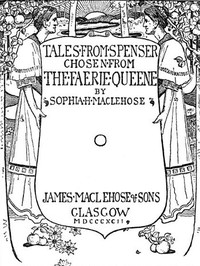
Tales from Spenser, Chosen from the Faerie Queene — Reading Notes
(0 User reviews)
748
Project Gutenberg
2011
Not confirmed
Children's stories; Magic -- Juvenile fiction; Chivalry -- Juvenile fiction; Knights and knighthood -- Juvenile fiction
Readers of public-domain and historical texts
Project Gutenberg digital edition
en
Edition facts
Words
35,035
Reading time
153 min
Text sections
4
Tales from Spenser, Chosen from the Faerie Queene — Reading Notes can be approached with a clearer sense of reading commitment from its source measurements: 35,035 words, 2 hr 33 min estimated reading time, and 4 detected text sections.
The text analysis averages about 24.6 words per sentence, while the detected sections provide another way to judge how the source is divided.
Project Gutenberg metadata also associates the work with “Children's stories,” connecting these edition facts with the source record’s subject description.
Source:
Project Gutenberg record #35161
Sophia H. MacLehose retells episodes from Spenser's Faerie Queene as self-contained stories for children, focusing on knights, dragons, and enchanted mirrors while leaving allegory aside. The excerpts show a narrator who condenses Spenser's ornate verse into plain prose, preserving key confrontations and moral contrasts.
Read the complete public-domain text at its original source.
Read on Project GutenbergSophia H. MacLehose's Tales from Spenser selects episodes from The Faerie Queene and recasts them as self-contained stories for children. The preface states plainly that no attempt has been made to interpret allegorical or historical bearings; the tales are 'related simply as stories.' This choice shapes every page: Spenser's intricate stanzas are replaced by straightforward narration, and the moral weight of the original is carried by action rather than commentary.
The excerpts reveal a consistent method. MacLehose retains the core confrontations—Una with the lion, the Red-cross Knight against the dragon—but strips away Spenser's elaborate descriptions and philosophical digressions. What remains is a sequence of vivid, causally linked events, told in a voice that is clear, brisk, and unadorned.
Condensing the Epic Frame
MacLehose opens by establishing Gloriana's court and the dragon's siege in a few brisk sentences, where Spenser would have spent cantos. The narrator moves quickly from the king and queen's plight to Una's resolve: 'She set out upon her journey, dressed in a long black robe covered by a deep veil; she rode an ass as white as snow.' Details that in the original carry allegorical weight—the white ass, the lamb, the dwarf—are presented here as simple story elements. The effect is to foreground plot over symbolism, making the narrative accessible but also flattening some of Spenser's layered meanings.
Contrasts in Character Portrayal
The excerpts show a clear pattern in how MacLehose handles character. Virtuous figures like Una and Florimell are described through their actions and immediate emotional responses: Florimell is 'gentle loveliness,' Marinell 'pined and languished and wept.' Braggadochio, by contrast, is introduced with a blunt moral judgment: 'Among the good and brave knights who fought in Faeryland was a false one named Braggadochio.' The narrator does not let readers infer his dishonesty; it is stated outright. This technique simplifies moral evaluation for a young audience but sacrifices the ambiguity that Spenser often cultivates.
The Role of the Supernatural
Magic and divine intervention are handled with matter-of-fact brevity. When Cymoent needs to free Florimell, she 'went straight to Neptune' and obtained a warrant; Proteus 'read his monarch's mandate in moody silence, but was forced to obey.' The supernatural machinery is treated as a bureaucratic process rather than a source of wonder. Similarly, the dragon is described as 'a huge and fearful' beast, but its allegorical resonance as sin or error is absent. MacLehose's version prioritizes narrative efficiency: magic solves problems, but it is never lingered upon or explained.
Readers familiar with The Faerie Queene will notice what has been left out: the allegorical layers, the Spenserian stanza, the philosophical asides. Those new to the material will find a clear, fast-moving introduction to some of its most famous episodes. MacLehose's choices—to simplify, to moralize openly, to prioritize action over symbol—make this a distinct retelling, one that reflects late-Victorian ideas about what children should read and how epic poetry should be adapted.
Reading about the knights peering into enchanted mirrors, I remembered sitting with my grandfather’s old copy of Spenser, tracing the words without understanding them. Later, Alice's Adventures in Wonderland — Key Ideas to Explore gave me that same quiet feeling—worlds that bend, where looking closer only reveals more questions, not answers.
There are no reviews for this eBook.
There are no comments for this eBook.
Reader reflection
Your personal reading reflection
Build a private reading journal entry for this title.
Your progress
0
/
10
2
Did this book hold your interest?
3
Would you encourage someone else to read it?
4
What was the reading difficulty like?
5
How distinctive were its ideas or approach?
6
Did the book give you something worth debating?
7
How much did the book move you?
8
Did the book meet your expectations?
9
In one sentence, what did you learn?
10