1

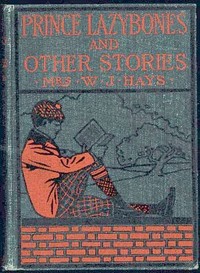
The Adventures of Prince Lazybones, and Other Stories — Themes and Context
(0 User reviews)
629
Project Gutenberg
2005
Not confirmed
Conduct of life -- Juvenile fiction; Children's stories; Fairies -- Juvenile fiction; Christmas -- Juvenile fiction
Readers of public-domain and historical texts
Project Gutenberg digital edition
en
Edition facts
Words
51,763
Reading time
226 min
Text sections
5
Before opening The Adventures of Prince Lazybones, and Other Stories — Themes and Context, the edition data offers a quick orientation: 51,763 words, 3 hr 46 min estimated reading time, and 5 detected text sections.
The text analysis averages about 19.3 words per sentence, while the detected sections provide another way to judge how the source is divided.
Project Gutenberg metadata also associates the work with “Conduct of life -- Juvenile fiction,” connecting these edition facts with the source record’s subject description.
Source:
Project Gutenberg record #15227
This collection of four children's stories by Helen Ashe Hays uses a leisurely, ironic narrative voice to introduce Prince Leo, a boy who prefers idleness to action, and other characters. The language shifts between fairy-tale formality and conversational asides, with recurring motifs of wind, fairies, and seasonal change.
Read the complete public-domain text at its original source.
Read on Project GutenbergThe narrator of The Adventures of Prince Lazybones, and Other Stories adopts a tone of mock solemnity from the first sentence, introducing the Lazybones family as “illustrious” and “distinguished.” This ironic voice persists throughout, undercutting the prince’s languor with dry observations: his smile is “given so freely” but without coin. The prose moves between elaborate period descriptions—fertile plains, silver streams, tropical vegetation—and sudden, colloquial asides, such as the remark that the prince’s heels were “in a very down-trodden state of humility.” Such shifts in register create a playful, unpredictable reading experience.
The Ironic Voice and Its Targets
The narrator’s irony is directed squarely at Prince Leo’s idleness. Leo’s “greatest happiness” is to lie basking in the sun, and his smile is described as an “inherited feature, like the blue hood of a Spanish Don”—a comparison that deflates princely dignity. The beggar who prefers the smile to a coin is left with an empty wallet, a detail that quietly mocks both the prince’s generosity and its inadequacy. This ironic stance extends to the family’s wealth: the estate is rich in timber and minerals, but the owners never cultivate the land because the market is “too distant.” The narrator’s tone is affectionate but pointed, inviting readers to see the humor in Leo’s passivity without condemning him outright.
Shifts in Pace and Narrative Mode
The collection’s pace varies markedly between stories. In “Phil’s Fairies,” the tempo slows to a hush as Phil waits for a fairy visit, with the wind harp in the window and the boy “keeping very still.” The fairy’s story, however, accelerates into a brisk adventure: an ogre who catches “lazy, loitering little fellows” and sets them to work on a stone wall. The ogre’s cruelty is described in swift, cumulative clauses—“tease and ill-use,” “throw over their heads the nets”—while the princess’s intervention is introduced with a single, decisive sentence. These tempo changes mirror the fairy’s own method of urging blossoms to open: “by coaxing and persuasion” for some, “blow upon quite forcibly” for others.
Recurring Motifs: Wind, Fairies, and Seasonal Change
Wind and fairies appear across multiple stories, often linked to seasonal transitions. In “Phil’s Fairies,” the wind harp is placed in the window, and the fairy’s story mentions herb elves helping blossoms open “a little late in the season.” The ogre’s lake setting and the princess’s “swanlike sailing-boat” introduce water as a contrasting element. In “Boreas Bluster’s Christmas Present,” the title character’s name suggests wind personified. These motifs are not merely decorative; they structure the narrative’s movement between indoor quiet and outdoor adventure, between stillness and action. The fairy’s comment that “nothing comes amiss” to Phil hints at a receptive attitude that the stories reward.
Readers attentive to narrative voice will notice how Hays balances moral instruction with entertainment. The ironic tone undercuts didacticism, while the shifts in pace keep the collection from feeling uniform. Pay particular attention to the way the narrator addresses the reader directly—these asides often signal a change in mood or a playful commentary on the action.
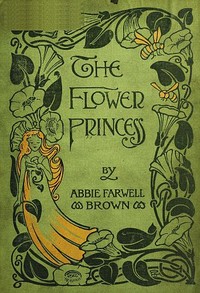
Prince Leo’s indolence always felt like a held breath, waiting for the wind to move him. Years later, I found that same patient stillness in The Flower Princess — Key Ideas to Explore, where another royal lets seasons drift past, content to simply be. They share a quiet grammar of waiting, a language I’ve come to love.
There are no reviews for this eBook.
There are no comments for this eBook.
Reader reflection
How will you remember this book?
Save your reaction, strongest insight, and memorable passage.
Your progress
0
/
10
2
Was reading this book enjoyable?
3
How likely are you to recommend this book?
4
How easy was the book to follow?
5
Did it raise ideas you would like to talk about?
6
What was the strongest part of the book?
7
Would you read this book again?
8
Was the book moving at the right speed?
9
What did this book teach you most?
10