Doctor Papa — A Reader’s Guide

(5 User reviews)   1535
May, Sophie, 1833-1906, Humphrey, Lizbeth Bullock, 1841- [Illustrator] Project Gutenberg 2015
Conduct of life -- Juvenile fiction; Children's stories; Children -- Conduct of life -- Juvenile fiction; Friendship -- Juvenile fiction; Sisters -- Juvenile fiction; Pets -- Juvenile fiction; Fire -- Juvenile fiction; Strawberries -- Juvenile fiction Readers of public-domain and historical texts
Project Gutenberg digital edition en

Edition facts

Words: 27,691
Reading time: 121 min
Text sections: 4
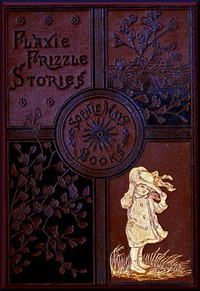
Sophie May's 1877 children's novel follows Flaxie Frizzle, a spirited girl whose mispronunciations and imaginative play drive the story. Through episodes like a scarecrow sister, a knitting-work party, and a visit from cousin Rose, the book explores childhood friendship, family dynamics, and the humor of youthful misunderstandings.
Share
Editorial Edition Score 4.6/5

Calculated from edition completeness, EPUB availability, text structure and catalogue metadata. Not a user rating.

Edition quality

Read the Text

THE SCARECROW SISTER.

One morning little Miss Frizzle danced about her brother Preston, as he was starting for school, saying,--

"If a little boy had one poggit full o' pinnuts, and one poggit full o' canny, and one in his hands, how many would he be?"

This was a question in arithmetic; and, though Preston was a large boy, he could not answer it.

"Answer it yourself," said he, laughing.

"He'd have fousands and fousands--as many as _four hundred_!" said Flaxie, promptly.

"Shouldn't wonder! What's the need of my going to school, when I have a little sister at home that knows so much?" cried Preston, kissing her and hurrying away.

Flaxie wished he and her sister Julia--or Ninny, as she called her--could stay with her all the time. She was lonesome when they were both gone; and to-day her mamma said she must not go out of doors because her throat was sore.

She stood for awhile by the kitchen window, looking at the meadow behind the house. It was sprinkled all over with dandelions, so bright and gay that Flaxie fancied they were laughing. _They_ didn't have sore throats. O, no! they could stay out of doors all day long; and so could the pretty brook; and so could the dog Rover; and the horses, Whiz and Slowboy; and the two young colts.

By-and-by the colts came to the kitchen window, which was open, and put in their noses to ask for something to eat. Flaxie gave them pieces of bread, which Dora handed her; and they ate them, then ran out their tongues and licked the window-sill, to be sure to get all the crumbs.

"What if they should bite you!" said Dora.

"O, they won't! I'm a doctor's chillen; they won't bite _me_," said Flaxie, who was never afraid of any thing or anybody.

"Well, you mustn't keep that window open any longer. You'll get cold, if you _are_ a doctor's children," said Dora. "Run into the parlor to your mother. Why, you haven't seen her for an hour."

Flaxie was not at all anxious to see her mother, but ran into the parlor and called for a slate and pencil. Mrs. Gray gave them to her; and Flaxie drew pictures for ten minutes,--such pictures! Then the squeaking stopped, and she began to cry.

"What is it, darling?" said mamma.

"I've losted my _pessle_," sobbed Flaxie.

"O, well, I'll get you another. Don't cry."

"I've losted it _up my nose_," screamed the child, running to her mother in great distress.

It was true. The pencil was a very short one; and, in poking it into her nose, just for fun, she had pushed it too far, and it would not come out. Mrs. Gray tried her very best; but the harder she tried the further up went the pencil, and the more Flaxie's nose bled and swelled. It was growing worse every minute; and Mrs. Gray, not knowing what else to do, called Dora from the kitchen and sent her for "Dr. Papa."

When Flaxie knew her father was sent for, she cried louder than ever; for she thought she must be dreadfully hurt.

"Is I a-goin' to die?" said she. "I wouldn't die for fi-ive dollars!"

"No, indeed, pet, you won't die. Dr. Papa will make you all well in two minutes."

"Will he? O, dear, my nose is _so_ sick! Kiss it, mamma!"

Mamma kissed the poor purple little nose, which helped Flaxie very much; but she burst out afresh, next moment. "How bad Dr. Papa'll feel when he comes home!"

Her mother soothed her; but soon she fell to crying again.

"How _Ninny_'ll feel when _she_ comes home!"

Mrs. Gray comforted her for this with more kisses; but presently Flaxie sobbed out once more,--

"How _Pesson_ will feel when _he_ comes home!"

For the child truly believed her friends would grieve more about it than she did.

Dr. Papa hurried to his darling as fast as he could; but, by the time he got home, her nose was badly swelled, and he had to hurt her very much in order to get out the "pessle." When it was all over, he took her on his knee, and tried to make her forget her troubles by showing her some pictures.

"The man in this picture is a school-teacher," said he; "and the little boy who stands by his desk must have been naughty, for the teacher is going to whip him with that stick."

"Goin' to w'ip him? Well, I'll wait and _see_ if he w'ips him," said Flaxie, folding her hands and staring at the picture with all her might.

Dr. Papa laughed. He often laughed at what Flaxie said; and Mrs. Prim, a lady who lived in town, thought he "spoiled her." Perhaps he did.

"O, see the pretty chickies," said the child, as her father turned to another picture. "Does God make chickies?"

"Well," said she, thoughtfully, "how they must have _hollered_ when he stuck the fedders in!"

I must confess Dr. Papa laughed again. Then he put Flaxie down, and said he must go, though she held him by the vest-buttons, and declared the next picture would be "awful funny."

"O, I _guess_ it will!"

"Well, dear, if it's ever so funny, Dr. Papa will have to go, for a sick lady wants to see him."

"Did the lady get a pessle up _her_ nose?"

"No, she didn't; but she is very sick for all that. Good-by, pet."

As Dr. Gray went out of the yard, he said to his stable-boy,--

"Crawford, I think the crows are getting too much of that corn we planted. Can't you put up a scarecrow?"

Crawford thought he could, and went into the house to ask Dora for some old clothes.

"I'll tell you what you'd better do, Crawford," said Dora. "Make a _little_ scarecrow, and dress it up like Flaxie Frizzle. I'll get you some of her old clothes."

"That's just the thing," replied Crawford. "Give me her red hood and waterproof, and I'll stuff 'em out with hay. O, my, won't the crows be scared?"

Crawford chuckled to himself all the while he was making this little image; and, when it was done, he carried it out to the corn-field, and fastened it upon a stump.

"Well, it does look exactly like her, and the crows won't know the difference," said he: "only she couldn't keep still to save her life. Guess I'll pin on a veil or something to blow in the wind, as if she was moving."

Dora gave him an old red scarf; and it certainly did make the image look very much as if it were alive. People who rode by turned to gaze at it, and said,--

"There's the doctor's baby. I'm glad her mother has wrapped her up so well: it's pretty cold weather for this time of year."

But you must know Flaxie Frizzle was surprised when _she_ saw the scarecrow! She had climbed the sofa, and was looking out of the window. What did she see, standing there in the corn-field? It was her own self! She rubbed her eyes, and looked again.

"O mamma, mamma," called she. "Come here _just_ as kick! You s'pose, mamma, who's playing _coop_ out there? It's ME! And _here's_ ME, right here! Have I got a little sister?"

It was some time before she could be made to understand that the scarecrow was not herself, was not alive, and was only a rag-baby made of sticks and straw and old clothes. The next day it rained from morning till night; and everybody who went by the house thought it too bad that poor Flaxie Frizzle should be in the corn-field, getting so wet.

At least a dozen times the door-bell rang; and a dozen people told Dora to be sure and let Mrs. Gray know her baby was out in the rain!

Dora laughed, and assured the kind people that "_that_ baby in the field was neither sugar nor salt, and water wouldn't hurt her a grain."

But she told Crawford "it did her good to see how much the neighbors thought of Flaxie Frizzle, for all she was such a curious-acting child."

"And, Crawford, you'll have to take down that 'scarecrow sister,' and put up something else; for I can't spend my time running to the door to explain to folks that it isn't Flaxie Frizzle."

That summer Grandpa Pressy came to Dr. Gray's, visiting. Flaxie Frizzle had five grandfathers, but she loved Grandpa Pressy best of all; and he loved her, too, and called her his "little boy."

Now, the dear old gentleman had a poor memory; and, if he laid down his newspaper or spectacles, he hardly ever knew where to find them.

"I guess I left my silk handkerchief up stairs," said he, one morning. "Won't my little boy run up, and get it off the bureau?"

Flaxie went in a moment, but the handkerchief was not there. There was a silver box on the bureau, though, a very pretty one; and Flaxie thought she would open it and see what was in it. It was an old-fashioned snuff-box. Grandpa Pressy did not use snuff, but he carried his medicines in this box when he went away from home. There were three kinds of medicine,--cough lozenges, sugar-coated pills, and a tiny bottle wrapped in cotton-wool, and marked "wine of antimony."

First, Flaxie took out a cough lozenge, and put it on her tongue; but it was rather fiery, and she said,--

She would not touch the "candy pills," for she had seen the same sort before, and knew they were bitter inside; but she picked the vial out of the cotton-wool, held it up to the light, and thought it looked "very nice."

"Mayn't I have some, grandpa?" whispered she.

She knew her gampa was not there to hear her: it was a way she had of talking to herself.

"Mayn't I have some, gampa?" Then she smiled very sweetly, and replied aloud,--

"Yes, little boy, you _may_ have some."

Ah, Flaxie, Flaxie! To think you should know no better than to meddle with such dreadful things! The antimony was as poisonous as it could be; but, if anybody had told you so, you would have swallowed it all the same, I suppose, you silly little creature!

How much antimony Flaxie took, I'm sure I don't know, but it was a great deal; and it frightens me now to think of it, for this is a true story.

"I'm a doctor's chillen; I _mus'_ take mederson," said she, making a wry face as she found it did not taste at all "nice."

Suddenly a voice called out,--

"Where's that try-patience?"

It was Dora; she was close by the door. Flaxie threw the vial and the box behind the looking-glass, and answered, in an innocent tone,--

Of course she knew Dora meant _her_; for Dora never, never called anybody else a "try-patience."

"What are you up in this chair for, rummaging round in folks' bureaux?" said Dora, hugging and scolding and shaking her, all in a breath.

"I wasn't doin' nuffin," said guilty little Flaxie, pouting. "If you scold to me, Dodo, I'll _make_ me a naughty little goorl!"

"You're always naughty, without _making_. There, now, come away: this room is no place for you."

"O, now I know what I camed for," said Flaxie; "it was gampa's hang-ger-fiss."

"O, lor', I found his hang-ger-fiss long ago in the dining-room. Away with you. I want to make the bed."

As Dora spoke, she kissed Flaxie; and I wonder she didn't perceive that the child's breath smelt of medicine.

"There, there, you're an old darling," said Dodo, "whatever you do."

That was the way Dora's scoldings usually ended; and Flaxie did not mind them in the least. She danced down stairs in a great hurry; for, in the front yard under the trees, her brother Preston and two other boys were swapping jack-knives, and Miss Frizzle always liked to be on the spot when any thing was going on.

The boys all smiled when they saw her coming; and Preston drew her close to his side, and straightened the lace frill in the neck of her dress. He was only eight years old; but he had always felt a great deal of care of his little sister.

"Come here, Miss Frizzle, and I'll put you in my pocket," said Bert Abbott.

"Got some canny in your poggit? If you have, I'll go," responded Flaxie, with a roguish smile.

This was considered such a bright speech that the boys, all three, turned their pockets inside out to see if they had any sweetmeats to offer. Bert Abbott found a broken tart, and Jack Snow a few peanuts. Flaxie took the "pinnuts" with a cool little nod, but the tart was not to her fancy.

"'Cause I don't like pie-grust, and _that's_ because," said she, curling her lip as she looked at the crumbs.

"Guess you don't like 'pinnuts' either," said Jack Snow; for she was dropping the shells down Preston's back and the kernels into the grass.

"Yes, I like 'em; pinnuts is _le-licious_," replied Flaxie, faintly; but she was beginning to grow rather pale round the mouth.

"Come, boys," said Preston, who had not the slightest idea that any thing ailed his precious sister, "let's go and have our sail. I'll run and get Flaxie's hat."

They called it "sailing;" but it was merely rocking about in the pretty boat, called the "Trout-fly," which was moored on the bank of the brook. As the boys did not know how to swim, Dr. Gray never allowed them to unfasten the boat.

It was a lovely day. The hills were as blue as the sky, and the sky was as soft as a dream. What harm was there in having a little "sail" in that black and green "Trout-fly?" Preston thought they were doing a proper thing, and so they were; but the young passenger they took with them was soon to give them a world of trouble.

The boys had a pretty good time; but they could not make Flaxie talk: she said her "teef were tired." There was an anxious look on her face, and she never once smiled.

"What under the sun ails you?" said Preston, as she threw herself down in the bottom of the boat, with her head on his feet.

"I don' know," replied Flaxie; for she had no more remembrance of her dose of poison than a kitten has of its last saucer of cream.

"No; but my _eyes_ are."

"Let her go to sleep; don't bother her," said Jack Snow.

"Yes, I shall bother her too. She's real white; and I can't stand it," said Preston, stroking her cold cheeks in alarm.

At that Flaxie began to cry. She was not in pain, as she had been when she got the slate-pencil up her nose; but somehow she felt very unhappy.

"Guess I's goin' to die," sobbed she.

"Why, Flaxie Frizzle Gray, what do you mean by such talk as that? What do YOU know about dying?"

"O, I know 'bout it; we'll all die some day, mamma said so; guess it's _some day_ now," gasped Flaxie, mournfully.

"That's not a pretty way to talk," said Bert Abbott. "Here, eat a raisin, Flaxie, that's a good baby."

Flaxie shut her eyes firmly, and would not touch the raisin. Preston began to feel uneasy: he had never seen his sister's rosy little face look like this before. "See here, boys," said he, "let's get out of this, and I'll carry Flaxie home to mother."

If he could only have done it! But, somehow, before he had fairly got the child in his arms, she drew away from him and leaned over the stern of the boat. I suppose she was blind and dizzy; but, at any rate, she lost her balance and fell head-first into the brook, which was deep enough, even by the shore, to drown a man. It was done so quickly that nobody had time to stop her. Jack Snow reached out as far as he could and clutched the hem of her cambric dress; but it slipped through his fingers, and the child sank down, down to the very bottom.

"Hullo there!" screamed the boy, as if that could do the least good!

Preston plunged into the water. He did not know how to swim much; but he never stopped to think of himself, he must save his darling sister. O, _where_ was she? Why didn't she rise to the surface? He had heard his father say that people did not drown till they had risen at least once. Perhaps you, who know of Flaxie's taking poison, can guess why she did not rise. She had fainted away!

Preston dived, but came up without her. She had gone out of his reach. When he rose, he said to himself,--

"I'll never go home without my darling sister! If she drowns, I'll drown!"

"Jump into the boat," screamed the boys. "It's no use; you can't get her!"

"Yes, I _will_," said Preston, and dived again. That time, without knowing it, he _almost_ touched Flaxie, lying still as a log, ten feet below.

When he came up, the boys reached after him and pulled him into the boat. He struggled with all his might; but it was two against one, and he could not help himself.

"Oogle, oogle, goggle!" screamed he; for his mouth was so full of water that he could not speak.

"Pat him on the back," said Jack Snow, always ready with advice.

"Oogle, oogle, oggle, goggle!" cried Preston, striking out both arms, and determined to dive again; but the boys held him fast. If they had not held him, he would certainly have drowned, but he could not have saved Flaxie. He had courage enough, and will enough for a grown man; but, alas, his strength was only that of a little boy.

And what could be done? Bert Abbott ran up the bank, screaming for help. Was all the world deaf? If those boys had never prayed before, they prayed now. "Help us, help us, O God, _won't_ you help us? Send somebody to save Flaxie!"

It was quite five minutes--so I am told--that the child lay in that brook before any help came. At last a man, who was going by, heard the outcry, and thought it sounded like something more than boys' play. He ran to the spot; and, as he could swim, he soon had Flaxie out of the water; but, whether dead or alive, that was the question.

There she lay in his arms, as still as a stone. The water dripped from her beautiful flaxen hair, from the tips of her white fingers, from her dimpled chin; but not an eyelash stirred, and her little heart had ceased to beat.

"The poor thing is clean gone, no mistake about that," thought the man, putting his lips to Flaxie's cold mouth.

"Rub her! Roll her! Run for father!" shouted Preston, flinging himself upon his lifeless sister, and kissing her wildly.

"Here, boys, you run ahead and get the doctor, and I'll carry her to the house as quick as I can," said Mr. Bond.

"Don't take on so," added he, soothingly to Preston. "Folks do come to, sometimes, and live, when they look as far gone as she does."

He said this from the kindness of his heart; but in reality he had very little hope of Flaxie. Dr. Gray had scarcely any hope either: he thought she had been in the water too long.

Ever so many men and women worked over the child for hours and hours: Dr. Papa and mamma among the rest, of course; and even Grandpa Pressy helped a little, though his hands trembled, and he was very pale. It did not seem to be of the least use; still, they kept trying.

"O, you dear, beautiful baby," said Mrs. Gray, the tears falling over her cheeks, "it is so hard to give you up!"

Dr. Papa held his cold little darling, his "Pinky Pearly," to his heart; but he could not speak a word.

But, just as they were all giving her up, she was seen to breathe, very, very softly.

"Saved!" whispered Dr. Papa.

"Saved!" echoed mamma.

"Thank God!" said Grandpa Pressy.

How did Preston feel when his dear sister slowly opened her blue eyes? He would have given his life for her,--was he glad she was saved? Ah, _was_ he glad, the noble boy?

In a few minutes Dr. Papa knew the whole story: he found out that Flaxie had been taking poison.

From the first page, Sophie May establishes Flaxie Frizzle as a child who redefines arithmetic: “If a little boy had one poggit full o' pinnuts, and one poggit full o' canny, and one in his hands, how many would he be?” Her brother Preston cannot answer, and Flaxie declares “fousands and fousands—as many as four hundred!” This moment captures the book’s central pleasure—watching a young mind bend language and logic to its own rules. The opening chapter, “The Scarecrow Sister,” quickly introduces Flaxie’s loneliness when siblings are at school, her sore throat keeping her indoors, and her imaginative connection to the natural world: dandelions “laughing” in the meadow, colts nosing the kitchen window for bread. May’s prose stays close to Flaxie’s perspective, making the ordinary feel fresh.

Flaxie’s Voice and the Humor of Mispronunciation

Flaxie’s speech is the book’s most consistent comic device. She says “poggit” for pocket, “canny” for candy, “new-algery” for neuralgia, and asks visitors “You got any trundlebeds to Boston?” These are not random errors; they follow a logic of sound substitution and overgeneralization. May uses them to signal Flaxie’s age and social inexperience while never mocking her outright. The humor arises from the gap between Flaxie’s earnest intent and the adults’ amused reactions. In the chapter “Making Calls,” Flaxie’s missteps—forgetting to invite guests to remove their wraps, failing to sneeze on cue—turn a formal visit into chaos. The narrator notes that afterward, Lucy declares, “I'm glad you don't know how to behave!” This affectionate acceptance is key: Flaxie’s flaws endear her to others, and the book rewards readers who catch the wordplay.

Play, Pretense, and the Social World of Children

Much of the action unfolds through elaborate pretend games. In “Teasing Midge,” Flaxie hosts a tea party with her best wax doll and new tea-set, instructing cousin Rose to say “Won't you have some tea, lady?” The dialogue mimics adult manners: “How is your chillens, Mrs. Frizzle?” The children negotiate roles, serving imaginary meat and tea, while the dolls “sat in their chairs and looked on.” These scenes show May’s interest in how children rehearse social conventions through play. Earlier, in “The Knitting-Work Party,” the girls attempt a sewing circle that quickly dissolves into laughter. The narrator reports that Dovey Sparrow “rocking back and forth” and Lucy “hopping across the rug” cannot maintain the pretense of politeness. The book treats these breakdowns not as failures but as the natural energy of childhood, where rules are bent or abandoned for the sake of fun.

Siblings, Cousins, and the Texture of Family Life

Flaxie’s family includes older siblings Preston and Julia (called Ninny), who are often away at school, and a series of visiting cousins. The arrival of little Rose—“Midge”—prompts Flaxie to wish she would “never, never go home again.” The bond between the two girls is tender: Rose is meek and compliant, Flaxie bossy but affectionate. Their interactions reveal a hierarchy of age and temperament. Preston, the teasing older brother, appears mainly in the opening and in the chapter “Preston Keeping House,” where he takes on domestic duties. The book also features Aunt Jane, who suffers from neuralgia (which Flaxie calls “new-algery”), and a cast of neighbors like Mrs. Prim. These adults are background figures; the children’s world is largely self-contained. May sketches family relationships through small gestures—kissing, sharing food, comforting—rather than dramatic events.

Structure and Pacing: Episodic Adventures with a Light Touch

The novel is divided into twelve short chapters, each a self-contained episode. Titles like “The Scarecrow Sister,” “Flaxie’s Dose,” and “The Wee White Rose” hint at the variety of situations. The pacing is brisk: a chapter might begin with a problem (a sore throat, a lost card-case) and resolve within a few pages. May uses repetition—Flaxie’s mispronunciations, her desire for company, her imaginative games—to create continuity without a tight plot. The excerpts show that the book moves from indoor scenes (kitchen, nursery) to outdoor ones (meadow, barn), and from solitary play to group interactions. The final chapter, “Mrs. Prim’s Strawberries,” suggests a return to domestic秩序. Readers should expect a series of vignettes rather than a single narrative arc. The pleasure lies in the accumulation of small, vivid moments that build a portrait of a lively child.

As you read, pay attention to how May balances Flaxie’s childish perspective with the narrator’s gentle irony. The humor often depends on knowing more than Flaxie does—catching her malapropisms or the absurdity of her arithmetic. Yet the book never condescends. Notice also how the setting (a rural home with meadows, colts, and a brook) grounds the fantasy. For a first reading, let the episodes stand alone; the charm is in the details, not in a driving plot. The title Doctor Papa refers to a game Flaxie plays, but the real doctor here is May’s keen ear for how children speak and play.

That rainy afternoon, Flaxie’s muddled words felt like a warm quilt—her tiny world of scarecrow sisters and knitting parties hummed with a sweet, mismatched logic. I set the book down, and my gaze drifted to another spine, remembering how childhood tales carry the same gentle, strangeness of misinterpreted glory. Stories from the Faerie Queen, Told to the Children — Edition Insights promised old knights and dragons, but it felt like the same quiet afternoon, just dressed differently.

Sebastian Walker
1 month ago

Elijah Nelson
4 weeks ago

Ella Campbell
1 week ago

Joseph Anderson
2 weeks ago

Sofia Johnson
1 month ago

5
5 out of 5 (5 User reviews )

Add a Review

Your Rating *
There are no comments for this eBook.

Reader reflection

How did this book work for you?

Your answers remain private and are stored only in this browser.

Your progress 0 / 10
1

Have you finished this book?

2

How did the book work for you overall?

3

How likely are you to recommend this book?

4

How demanding did the text feel?

Related eBooks