1

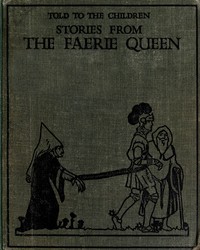
Stories from the Faerie Queen, Told to the Children — Edition Insights
(0 User reviews)
1453
Project Gutenberg
2012
Not confirmed
Conduct of life -- Juvenile fiction; Children's stories; Children -- Conduct of life -- Juvenile fiction; Mythology -- Juvenile fiction
Readers of public-domain and historical texts
Project Gutenberg digital edition
en
Edition facts
Words
25,820
Reading time
113 min
Text sections
3
Before opening Stories from the Faerie Queen, Told to the Children — Edition Insights, the edition data offers a quick orientation: 25,820 words, 1 hr 53 min estimated reading time, and 3 detected text sections.
The text analysis averages about 19.6 words per sentence, while the detected sections provide another way to judge how the source is divided.
Project Gutenberg metadata also associates the work with “Conduct of life -- Juvenile fiction,” connecting these edition facts with the source record’s subject description.
Source:
Project Gutenberg record #41350
Jeanie Lang retells eight episodes from Spenser's Faerie Queene for children, simplifying the allegory while preserving chivalric romance, moral clarity, and vivid description. The prose adapts Spenser's ornate style into direct narrative, with dialogue and action foregrounded.
Read the complete public-domain text at its original source.
Read on Project GutenbergJeanie Lang's retelling of Edmund Spenser's The Faerie Queene for children opens with a directness that signals her editorial method: she condenses Spenser's elaborate stanzas into plain sentences while keeping the core of each adventure. In 'Una and the Lion,' the dragon's 'fiery breath' turns 'trees and grass and flowers into black ashes'—a sensory detail that replaces Spenser's dense allegory with immediate peril. Lang's diction leans toward the concrete: knights 'treat' ladies, shepherds 'sulk and scowl,' and a witch's magic is simply 'wicked.' The result is a version that prioritizes plot momentum and clear moral contrasts over the original's layered symbolism.
Diction and Moral Clarity
Lang consistently replaces Spenser's archaic, polysyllabic vocabulary with simpler terms that signal good or evil without ambiguity. Una is 'beautiful' and 'good'; the dragon is 'hideous' and kills 'men and women and little children.' The witch in 'Florimell and the Witch' is simply 'wicked,' and her magic is described as 'spiteful tricks.' This binary language suits the intended audience but also flattens Spenser's nuanced allegory. For instance, the Redcrosse Knight's spiritual struggles become a straightforward fight against a dragon. Lang's word choices—'dreadful,' 'happy,' 'gentle'—create a world where virtue is instantly recognizable and vice is unmistakable.
Dialogue as Character Marker
Lang uses dialogue sparingly but effectively to define character. The old shepherd Melibœus speaks in a courteous, measured tone: 'I have only a little cottage, turfed outside to keep out the wind and wet, but it is better to be there than to roam all night in the lonely woods, and I bid you welcome, Sir Knight.' His hospitality contrasts with Corydon's jealous muteness. When Calidore offers gold, Melibœus refuses: 'I do not want your gold, but, if you will, stay with us and be our guest.' This exchange establishes the shepherd's wisdom without exposition. In contrast, the witch's dialogue (not shown in excerpts) is presumably minimal, as Lang relies on action to convey malice.
Description and the Pastoral Setting
Lang's descriptive passages are most vivid in pastoral scenes. In 'Pastorella,' she builds a tableau: 'In the middle of the ring of girls sat Pastorella,' wearing a 'crown of spring flowers that the shepherdesses had bound together with gay silken ribbons.' The repetition of 'looked'—'he looked, and he looked, and he looked again'—mimics Calidore's fixation. Lang also adds sensory details absent from Spenser's original, such as 'the evening dew began to fall, and the sunset slowly died away.' These touches ground the romance in a tangible world. However, she omits Spenser's elaborate descriptions of armor and heraldry, focusing instead on natural imagery that a child can visualize.
Structure and Selection of Episodes
Lang selects eight episodes from Spenser's six books, each with a clear narrative arc. She begins with Una and the Lion, establishing the pattern of a virtuous protagonist overcoming a monstrous threat. The stories are self-contained, with minimal cross-references. Lang's introductions and transitions are functional: 'Now, one of the shepherds, whose name was Corydon...' This linear structure sacrifices Spenser's interwoven allegories for accessibility. Notably, she omits the more philosophical or violent episodes, such as the House of Pride or the Bower of Bliss. The chosen tales emphasize chivalric courtesy, as when Calidore places the victor's crown on Corydon's head, reinforcing the moral lesson of generosity.
Lang's adaptation invites young readers to encounter Spenser's characters as archetypes of virtue and vice, stripped of allegorical complexity. The prose moves briskly, with dialogue and action carrying the moral weight. Readers familiar with the original will notice the simplifications; newcomers will find a clear entry point into the world of knights, dragons, and enchanted mirrors. The illustrations by Rose Le Quesne, one per story, complement the text's visual clarity.
I finished Stories from the Faerie Queen and felt that strange quiet after closing a book, like waking from a vivid dream. It made me think of that other old story, where a boy’s stubbornness slowly softens into something kinder. Both leave you with a gentle ache for courage, the sort that lingers long after the page. Oscar; Or, The Boy Who Had His Own Way — Inside the Classic has that same patient warmth.
There are no reviews for this eBook.
There are no comments for this eBook.
Reader reflection
Your personal reading reflection
Build a private reading journal entry for this title.
Your progress
0
/
10
2
Was reading this book enjoyable?
3
Is this a title you would suggest to others?
4
How easy was the book to follow?
5
Was the book easy to understand?
6
What was the strongest part of the book?
7
What was its emotional impact?
8
Would a second reading be valuable?
9
What did this book teach you most?
10