About 113 minutes
Stories from the Faerie Queen, Told to the Children — Edition Insights
Childrens Adventures
25,820 recorded words. 5 minutes difference from this book's estimate.
View Gutenberg source #41350
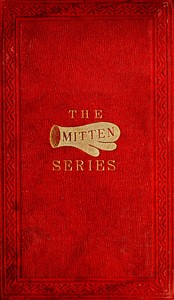
For The Orphan's Home Mittens, and George's Account of the Battle of Roanoke Island Being the Sixth and Last Book of the Series — Text and Context, the stored edition analysis reports 24,647 words, 1 hr 48 min estimated reading time, and 4 detected text sections.
The text analysis averages about 17.0 words per sentence, while the detected sections provide another way to judge how the source is divided.
Project Gutenberg metadata also associates the work with “Conduct of life -- Juvenile fiction,” connecting these edition facts with the source record’s subject description.
Explore this collection
These alternatives are selected using recorded categories and estimated reading time.
About 113 minutes
Childrens Adventures
25,820 recorded words. 5 minutes difference from this book's estimate.
View Gutenberg source #41350About 103 minutes
Childrens Adventures
23,492 recorded words. 5 minutes difference from this book's estimate.
View Gutenberg source #76243About 114 minutes
Childrens Adventures
26,092 recorded words. 6 minutes difference from this book's estimate.
View Gutenberg source #63418Search stored excerpts and compare books → Choose by your preferences →
Choices use stored catalog measurements. Estimates vary with reading speed. A shared category is a catalog label, not a claim that two books have the same argument or literary quality.
Search reads excerpt text stored with this catalog and links to its associated Gutenberg record. The connection is stored in the site database; this tool does not recheck that every excerpt is word-for-word identical to that external record. Excerpt search does not cover every chapter and does not verify historical publication dates.
Catalog snapshot checked: 2026-09-25. Coverage: 96 public books, 96 available source excerpts.
Read the complete public-domain text at its original source.
Read on Project GutenbergThe book opens with a lively scene in which Aunt Fanny is greeted by children who “hugged, and squeezed, and kissed” her. A misunderstanding over the phrase “had you children in his eye” sparks laughter and tears, showing how the narrative blends wordplay with earnest moral correction. The children’s mother explains the figure of speech, and the kitten Mary O’Reilly is brought in to comfort little Willie. This episode establishes the book’s tone: affectionate, didactic, and alert to the nuances of language.
The middle excerpt shifts to a first-person account by a minister who visits an orphanage. He describes ten boys who struggle to keep New Year’s resolutions. The minister rewards good behavior with books, but the boys repeatedly fail. A lottery for a book becomes a test of character: the smallest boy, Joseph, draws names, and the winner, Theodore, promises to lend the book to others. The minister notes that “not a mean expression or covetous look was to be seen.” This embedded narrative reinforces the theme of selflessness and frames the orphanage as a setting for moral growth.
The third section, titled “The Battle of Roanoke Island,” is presented as George’s firsthand account. The catalog subject headings confirm the historical setting: the Union capture of Roanoke Island in February 1862. The excerpt does not include battle details, but the title and context suggest a shift from domestic moral instruction to war narrative. George’s voice likely contrasts with Aunt Fanny’s playful tone, offering a direct, possibly sobering view of combat. Readers should note how this section bridges the orphanage story and the concluding “Last of the Mittens.”
The title’s “Orphan’s Home Mittens” reappears in the final section, “The Last of the Mittens.” The mittens likely serve as a tangible symbol of charity or connection between the orphanage and the wider world. The catalog lists “Conduct of life” and “Children – Conduct of life” as subjects, and the mittens may illustrate lessons about giving and gratitude. The book’s structure—moving from a domestic frame story to a war account and back to the mittens—suggests a deliberate arc that ties personal virtue to national events.
Readers approaching this sixth and final book of the series should attend to how Aunt Fanny weaves together humor, moral instruction, and historical testimony. The opening’s wordplay and the minister’s story set expectations for a didactic but warm tone, while George’s battle account introduces a contrasting voice. The mittens, mentioned in the title and final section, may unify these threads. Because the excerpts are incomplete, the exact relationship between the orphanage and the battle remains unclear, but the book’s structure rewards attention to its shifts in perspective.
I keep thinking about the mittens in Aunt Fanny’s last book—how small, careful stitches held a larger warmth. There’s a similar quiet in how The Story of Little Black Mingo — Story, Setting & Ideas frames a child’s peril with such gentle, unhurried calm. Both feel like remembering, not telling. That’s the part that lingered.
Answer a few questions and save a private reflection on this device.