1

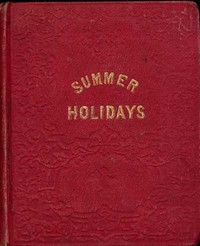
The summer holidays — Themes and Context
(0 User reviews)
973
Project Gutenberg
2005
Not confirmed
Children -- Conduct of life -- Juvenile fiction; Children's stories, American; Family -- Juvenile fiction; Uncles -- Juvenile fiction; Domestic animals -- Juvenile fiction
Readers of public-domain and historical texts
Project Gutenberg digital edition
en
Edition facts
Words
12,219
Reading time
54 min
Text sections
2
The source record for The summer holidays — Themes and Context measures this digital text at 12,219 words, 54 min estimated reading time, and 2 detected text sections.
The text analysis averages about 17.8 words per sentence, while the detected sections provide another way to judge how the source is divided.
Project Gutenberg metadata also associates the work with “Children -- Conduct of life -- Juvenile fiction,” connecting these edition facts with the source record’s subject description.
Source:
Project Gutenberg record #15684
This editorial note examines how Amerel's 1851 children's story uses a series of structured walks and conversations to blend adventure with moral and natural history lessons, focusing on the movement between domestic and outdoor settings.
Read the complete public-domain text at its original source.
Read on Project GutenbergFrom the moment Samuel Reed steps out of the carriage at his uncle's country seat, The Summer Holidays establishes a pattern of movement that structures the entire narrative. The story unfolds through a sequence of walks—to Daddy Hall's, through the woods, to the creek—each serving as a frame for both physical adventure and instructive conversation. This alternating rhythm between active exploration and reflective discussion in Uncle Harvey's parlor or library gives the book its distinctive pedagogical shape.
Walks as Structural Units
The chapter titles themselves announce the book's organizing principle: "The Evening Walk," "A Visit to Daddy Hall," "The Walk through the Woods," "The Walk to the Creek." Each walk propels the boys into a new setting where they encounter something worthy of note—a donkey, a hawk, a dog attack, a field of corn. The narrator rarely lingers in one place; even the opening chapter, "Uncle Harvey's Parlor," quickly gives way to outdoor activity. This constant motion keeps young readers engaged while allowing the author to introduce a wide range of subjects without didactic stagnation.
Recurring Images of Heat and Danger
Summer's intensity is a persistent undercurrent. Samuel arrives complaining of city pavements "about on fire" and men dying of sunstroke. Later, the boys' battle with a fierce dog leaves them "very warm, and could scarcely get their breath." Mr. Harvey warns that in summer a dog bite "often caused madness, followed by certain death." These references to heat and peril create a subtle tension beneath the holiday idyll, reminding readers that the season is not merely carefree but carries real risks—a point the story uses to underscore the value of caution and adult guidance.
The Library as a Counterpoint to the Field
After the corn-gathering episode, Mr. Harvey calls the boys into his library—a room described earlier as "very large" where he spends much time reading or writing. There he shows them "beautiful pictures of animals and countries" and explains the purposefulness of creation, using the sloth as an example. This scene typifies the book's method: direct experience (pulling corn) is followed by structured explanation (the library lesson). The domestic interior becomes a space for synthesizing outdoor discoveries, reinforcing the idea that knowledge is built through both action and reflection.
Voice and Dialogue as Instructional Tools
The boys' conversations are marked by natural curiosity and a slightly formal politeness. Samuel asks "why corn was sometimes called Indian corn," and Thomas replies with a mini-lecture on maize and its history. John interjects with personal preference: "I like Indian meal with sugar, eggs, and milk in it." The dialogue never strays into childish slang; instead, it models a respectful, information-seeking exchange. This controlled voice, consistent across all three boys, suggests that the author prioritizes clarity and moral instruction over individual characterization.
Movement Between Scenes
The narrative moves briskly from one episode to the next, often with a simple transitional phrase: "When Samuel had been at his uncle's about two weeks" or "After resting themselves, they walked home." These shifts keep the story progressing without elaborate scene-setting. The effect is a series of vignettes, each self-contained yet linked by the boys' ongoing summer stay. This episodic structure makes the book suitable for reading aloud in installments, with each chapter offering a complete incident and a discrete lesson.
Readers will find that The Summer Holidays rewards attention to its deliberate structure. The alternation between outdoor adventure and indoor instruction, the recurring motifs of heat and danger, and the consistent, polite dialogue all work together to create a coherent world where learning is woven into the fabric of play. Pay particular attention to how each walk introduces a new subject—natural history, morality, or practical wisdom—and how Uncle Harvey's library serves as the place where these threads are gathered and explained.
There’s something about the unhurried strolls in The Summer Holidays — how each turn of the path quietly opens a small lesson or a gentle wonder — that reminds me of another rambling companion. That same sense of a friendly guide, forever optimistic, lingers in Uncle Wiggily's Fortune — Inside the Classic. Two worlds, different walks, yet the same warm light spilled across the page.
There are no reviews for this eBook.
There are no comments for this eBook.
Reader reflection
How did this book work for you?
Your answers remain private and are stored only in this browser.
Your progress
0
/
10
2
Did this book hold your interest?
3
Would you recommend this book to another reader?
4
How demanding did the text feel?
5
How personally connected did you feel to the book?
6
Did the book meet your expectations?
7
How valuable was this book for your own interests?
8
What did you appreciate most?
9
What is the main idea you are taking away?
10