1

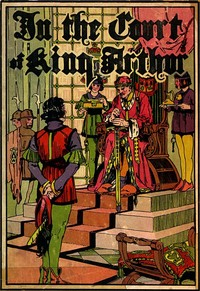
In the Court of King Arthur — Reading Notes
(0 User reviews)
117
Project Gutenberg
2004
Not confirmed
Children's stories; Adventure stories; Knights and knighthood -- Juvenile fiction; Arthur, King -- Juvenile fiction
Readers of public-domain and historical texts
Project Gutenberg digital edition
en
Edition facts
Words
43,760
Reading time
191 min
Text sections
5
In the Court of King Arthur — Reading Notes can be approached with a clearer sense of reading commitment from its source measurements: 43,760 words, 3 hr 11 min estimated reading time, and 5 detected text sections.
The text analysis averages about 14.3 words per sentence, while the detected sections provide another way to judge how the source is divided.
Project Gutenberg metadata also associates the work with “Children's stories,” connecting these edition facts with the source record’s subject description.
Source:
Project Gutenberg record #6582
Samuel E. Lowe's 1918 children's adventure follows young Allan as he enters Camelot, encounters knights like Sir Launcelot and Sir Tristram, and participates in sieges and quests. The catalog subjects of 'Knights and knighthood' and 'Arthurian legend' are evident, but the excerpts show a focus on action and dialogue rather than chivalric ideals.
Read the complete public-domain text at its original source.
Read on Project GutenbergSamuel E. Lowe's In the Court of King Arthur (1918) opens not with the Round Table but with a quiet-spoken lad, Allan, who refuses to carry a knight's message. The catalog subjects list this as a children's adventure story about knights and knighthood, and the excerpts bear that out: the narrative moves quickly from Allan's defiance to combats, sieges, and quests. Yet the text's voice is less about chivalric ideals than about practical action—how to hold a gate, how to throw a bridge into a moat, how to stay awake during a siege.
Allan's Entry into Camelot
The first chapter introduces Allan as a boy who stands up to a scowling knight, setting the pattern for a story where young characters act with agency. The table of contents shows Allan's journey from finding a champion to meeting knights, and the excerpts confirm that he is not merely a passive observer. In the siege scene, however, Allan is absent; the focus shifts to Sir Launcelot, Sir Tristram, and Sir Percival as they direct the defense. This suggests that the book alternates between Allan's perspective and that of the established knights, a structure that may serve to introduce young readers to Arthurian figures through a relatable protagonist.
Siege Tactics and Physical Detail
The longest excerpt describes an eight-day siege of a castle by King Mark's men. The prose lingers on practical details: the defenders are a 'haggard lot' with little sleep; the attackers carry a bridge to replace the drawbridge; Sir Launcelot, Sir Tristram, and two yeomen use 'thick staves' to push the bridge into the moat, sending twenty men into the depths. The fighting is described in terms of physical effort—'mighty work it was'—rather than magical or heroic feats. This emphasis on logistics and bodily fatigue gives the adventure a grounded feel, even as the characters are legendary figures.
Voice and Dialogue Among Knights
The dialogue in the siege scene is terse and practical. Sir Percival says, 'I cannot say that I would not welcome the arrival of Arthur and our men.' Sir Tristram replies, 'I had never thought sleep so great a luxury.' Sir Launcelot then insists they take turns resting. The knights speak not of honor or glory but of weariness and necessity. This conversational tone, combined with the narrator's matter-of-fact descriptions, creates a voice that is more akin to a boys' adventure story than to Malory's chivalric romance. The catalog subject 'Children's stories' accurately captures this accessible style.
Readers approaching In the Court of King Arthur should expect a fast-paced narrative that prioritizes action over atmosphere. The excerpts show little of the mystical elements often associated with Arthurian legend—no Lady of the Lake, no Grail visions in the provided text—but plenty of swordplay, siegecraft, and camaraderie. The book's structure, alternating between Allan's story and the knights' exploits, rewards attention to how the two threads connect.
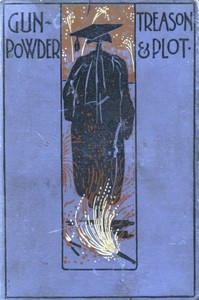
Flipping through In the Court of King Arthur, I noticed how young Allan's adventures hinge less on noble ideals than on sheer happenstance and nerve. That reminded me of another old collection I once leafed through, Gunpowder Treason and Plot, and Other Stories for Boys — Story, Setting & Ideas, where history similarly unfolds through boys stumbling into dangerous moments. There's something comforting in that—courage as accident, not destiny.
There are no reviews for this eBook.
There are no comments for this eBook.
Reader reflection
What did you think of this book?
Answer a few questions and save a private reflection on this device.
Your progress
0
/
10
2
Did this book hold your interest?
3
Is this a title you would suggest to others?
4
Did the language feel accessible?
5
Do you expect to return to this book?
6
How useful did the reading feel?
7
Did the story or argument move comfortably?
8
How distinctive were its ideas or approach?
9
What changed or sharpened your thinking?
10